
Brackenridgia
Ulrich, 1902
woodlice
Species Guides
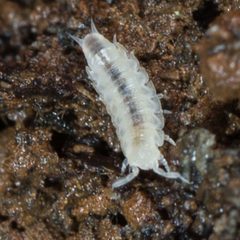
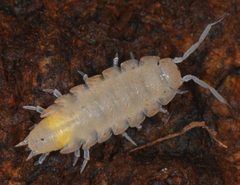
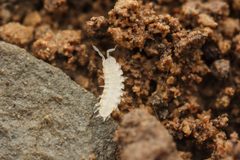
1Brackenridgia is a of small terrestrial isopods (woodlice) in the Trichoniscidae, established by Ulrich in 1902. The genus contains nine described distributed primarily in North America, with several species exhibiting troglomorphic adaptations for cave-dwelling. Species in this genus are typically found in moist, dark microhabitats including caves, forest litter, and rocky crevices.
Pronunciation
How to pronounce Brackenridgia: /bɹæ.kɪnˈɹɪ.dʒi.ə/
These audio files are automatically generated. While they are not always 100% accurate, they are a good starting point.
Identification
Members of Brackenridgia can be distinguished from other Trichoniscidae by their small body size and generally unpigmented or lightly pigmented , particularly in cave-dwelling . Troglomorphic species show reduced and elongated appendages compared to surface-dwelling relatives. Definitive identification to species level requires examination of male genitalia and other microscopic morphological features.
Images
Habitat
Moist terrestrial microhabitats including caves, karst formations, forest floor litter, and rocky crevices; several are obligate cave dwellers (troglobites).
Distribution
North America, primarily in the southern and central United States and Mexico; specific distributions vary, with some restricted to single cave systems or karst regions.
Ecological Role
Decomposer in soil and cave ; processes decaying organic matter in moist, dark .
Human Relevance
Subject of cave biodiversity and conservation studies; some have restricted ranges making them vulnerable to disturbance.
Similar Taxa
- TrichoniscusAlso in Trichoniscidae but distinguished by different genital and geographic distribution primarily in Europe and Asia.
- HaplophthalmusSimilar small size and preferences but differs in body shape and pleopodal lung structure.