
Littorophiloscia richardsonae
(Holmes & Gay, 1909)
Western Saltmarsh Woodlouse
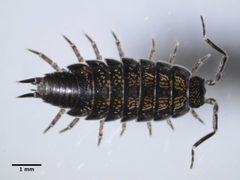
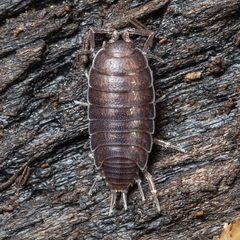
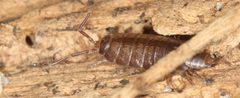
Littorophiloscia richardsonae is a small terrestrial isopod commonly known as the Western Saltmarsh . It belongs to the Halophilosciidae and has been documented primarily in coastal saltmarsh of western North America. The was described in 1909 and represents one of the few truly halophilic (salt-tolerant) woodlice in the region.
Pronunciation
How to pronounce Littorophiloscia richardsonae: //ˌlɪtəroʊfəˈlɒʃia ˌrɪˈtʃɑrdzəni//
These audio files are automatically generated. While they are not always 100% accurate, they are a good starting point.
Identification
This can be distinguished from other woodlice by its association with saline coastal environments. Members of Halophilosciidae are generally small, with body lengths typically under 10 mm, and possess adaptations for in high-salinity conditions. The name Littorophiloscia reflects its littoral (shoreline) preference, separating it from more widespread terrestrial philosciids.
Images
Habitat
Coastal saltmarshes and supralittoral zones along shorelines. The is adapted to saline conditions that exclude most other terrestrial isopods.
Distribution
Western North America, including coastal regions of the United States and Mexico. Records indicate presence in saltmarsh of the Pacific coast.
Ecological Role
Acts as a in coastal saltmarsh , contributing to decomposition of plant material in high-salinity environments where few other terrestrial isopods can survive.
Similar Taxa
- Halophiloscia couchiiAlso in Halophilosciidae and occupies similar saltmarsh ; distinguished by geographic distribution and subtle morphological differences in pleon structure.
- Philoscia muscorumSimilar body form but in Philosciidae; occurs in moist terrestrial rather than saline coastal environments, and lacks osmoregulatory adaptations for salt .
More Details
Taxonomic Note
The placement of this has been revised from Philosciidae to Halophilosciidae based on phylogenetic studies recognizing halophilic woodlice as a distinct lineage. This reflects convergent to saline rather than close relationship to the primarily terrestrial Philosciidae.