
Venezillo arizonicus
(Mulaik & Mulaik, 1942)
Arizona Pill-Bug
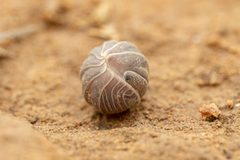
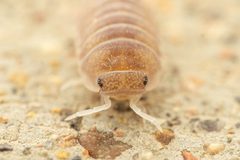
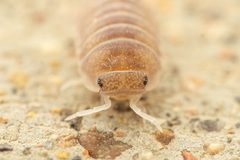
Venezillo arizonicus is a desert-adapted native to the Southwest Desert Province of North America. It possesses physiological adaptations to arid conditions, including highly efficient pleopodal lungs and a markedly lower metabolic rate compared to mesic oniscideans. The exhibits a critical thermal maximum of approximately 43°C, among the highest recorded for terrestrial isopods.
Pronunciation
How to pronounce Venezillo arizonicus: /vɛˈnɛ.zɪl.lo aˌɹɪˈzoʊ.nɪ.kəs/
These audio files are automatically generated. While they are not always 100% accurate, they are a good starting point.
Images
Habitat
Desert environments of the Southwest Desert Province; specifically adapted to arid conditions with low productivity.
Distribution
Southern Arizona, USA; to the Southwest Desert Province of North America.
More Details
Physiological Adaptations
Venezillo arizonicus exhibits several key adaptations to desert life: (1) highly efficient pleopodal lungs that maintain metabolic regulation even at 2% oxygen (ca. 2 kPa), (2) a catabolic rate of 1.50 μl min⁻¹ g⁻¹ at 25°C—substantially lower than mesic oniscideans (4–6 μl min⁻¹ g⁻¹), and (3) lower permeability to water loss relative to most other Oniscidea. These traits mitigate physiological hypoxia at high temperatures.
Thermal Tolerance
Winter-acclimatized individuals have a critical thermal maximum (CTmax) of 43.0 ± 0.85°C, which is 1.6–2.6°C higher than published values for summer-acclimatized mesic oniscideans. Catabolism shows a Q10 of 2.58 over 25–42°C, indicating substantial temperature sensitivity despite the high thermal .