
Venezillo
Verhoeff, 1928
Venezillo Pill Woodlice
Species Guides
4- Venezillo arizonicus(Arizona Pill-Bug)
- Venezillo microphthalmus(Small-eyed Venezillo Pill Woodlouse)
- Venezillo parvus(Little Pill Woodlouse)
- Venezillo pisum
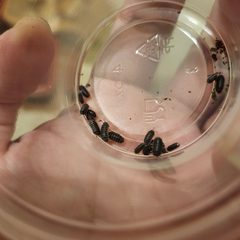
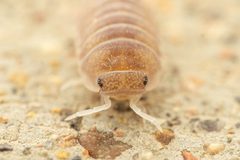
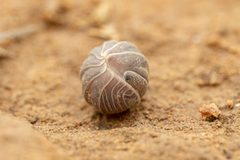
Venezillo is a of terrestrial isopods (woodlice) in the Armadillidae, containing over 140 described with worldwide distribution. The genus was established by Verhoeff in 1928, with the type species Venezillo clausus originally described from Caracas, Venezuela. Species occur across diverse from tropical to desert environments.
Pronunciation
How to pronounce Venezillo: /ve.neˈt͡sɪl.lo/
These audio files are automatically generated. While they are not always 100% accurate, they are a good starting point.
Identification
Distinguished from the closely related Caribodillo by the structure of the first pereonite: Venezillo has a narrower lobe with a well-defined cleft, whereas Caribodillo has a broader ventral lobe without such cleft. Genetically closely related to Caribodillo.
Images
Habitat
Terrestrial; includes desert environments (V. arizonicus in Southwest Desert Province of North America) and presumably mesic given wide distribution.
Distribution
Worldwide. Documented from Brazil, Cuba, Mexico, Senegal, United States, and Venezuela. Type locality Caracas, Venezuela.
Behavior
In V. evergladensis: precopulatory mate guarding lasting 2-3 days where male follows female closely and grasps her surface; female resistance through running, kicking, or conglobation (rolling into ball); males may fight for access to females; copulation in male-above position with rhythmic pleopod beating creating water currents for sperm transfer; postcopulatory mate guarding to prevent remating.
Similar Taxa
- CaribodilloClosely related sharing many morphological traits; distinguished by broader lobe of first pereonite without well-defined cleft (versus narrower lobe with cleft in Venezillo)