
Excirolana
Richardson, 1912
Species Guides
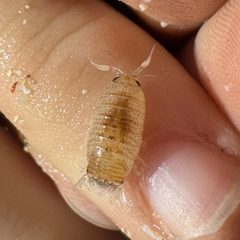
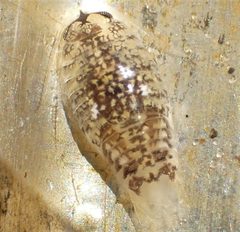
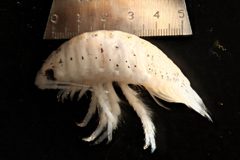
1- Excirolana chiltoni(sand piranha)
Excirolana is a of marine isopod crustaceans in the Cirolanidae, comprising approximately 15 described . Members are specialized inhabitants of exposed sandy beaches in tropical and warm temperate regions worldwide. The genus is characterized by , in which embryos develop internally within paired uteri rather than in an external pouch. This reproductive mode is considered an to the harsh environmental conditions of intertidal sandy .
Pronunciation
How to pronounce Excirolana: //ˌɛk.sɪ.rəˈlæ.nə//
These audio files are automatically generated. While they are not always 100% accurate, they are a good starting point.
Identification
Excirolana can be distinguished from other cirolanid isopods by their reduced oostegites, which form a genital rather than a functional pouch. This structural modification reflects their reproductive strategy. Species-level identification requires examination of morphological features such as body proportions, setation patterns, and uropod structure.
Images
Habitat
Exposed sandy beaches, primarily in the intertidal zone. occur across a range of beach morphodynamics from reflective to dissipative types. Some inhabit estuarine beaches with reduced salinity, while others are restricted to oceanic beaches with stable marine conditions.
Distribution
Tropical and warm temperate coasts worldwide. occur in the Atlantic and Pacific Oceans, with documented in North America, South America (Brazil to Argentina), Uruguay, Chile, Japan, Malaysia, and South Africa. The shows broad latitudinal range with population-level differentiation associated with local environmental conditions.
Seasonality
Reproductive activity varies by and latitude. Excirolana chiltoni in northern Japan breeds from early April through late September. Excirolana armata in southeastern Brazil shows continuous with peak ovigerous female abundance in winter and spring (July–November), and peaks in spring (November).
Life Cycle
development with internal incubation. Embryos progress through five intrauterine developmental stages and are released as manca larvae, which resemble but lack the eighth pair of thoracic legs. approximately 2 months in E. armata. Lifespan varies by : approximately 1 year in E. armata, 2 years in E. chiltoni. Growth rates are higher in warm seasons and reduced in winter.
Behavior
During breeding seasons, some exhibit spatial segregation along the beach slope. In E. chiltoni, ovigerous females occupy the high shore while juveniles remain closest to the waterline. This pattern reflects utilization of environmental gradients throughout the .
Ecological Role
Member of the intertidal macroinfauna in sandy beach . are influenced by the interplay of biotic and rather than beach morphodynamics alone.
Similar Taxa
- CirolanaCongeneric members with external pouches (marsupium) rather than internal uterine development; Excirolana distinguished by reduced oostegites forming genital
- EmeritaSympatric sandy beach crustacean ( Hippolytidae) with different body plan and reproductive mode; Excirolana is isopod with dorsoventral flattening, Emerita is decapod with crab-like form
More Details
Reproductive Adaptation
Ovoviviparity in Excirolana represents a derived condition among free-living isopods. Internal retention of embryos provides protection against desiccation, thermal stress, and mechanical disturbance in the exposed sandy beach . The oostegites, which form a pouch in most isopods, are reduced to a genital that covers the uterine openings.
Population Differentiation
Studies of E. armata demonstrate -level divergence in salinity associated with origin. Estuarine populations show greater tolerance to low salinity, while oceanic populations perform better under high, stable salinities but exhibit reduced plasticity. This differentiation aligns with documented genetic structuring along environmental gradients.
Latitudinal Variation
traits in E. armata show geographic patterns: at higher latitudes tend toward larger body sizes, extended lifespans, and broader ranges, while tropical populations exhibit higher mortality rates and faster growth. However, local -dependent factors can override these broad geographic trends.
Sources and further reading
- BugGuide
- Wikipedia
- GBIF taxonomy match
- iNaturalist taxon
- NCBI Taxonomy
- Catalogue of Life
- Ovoviviparity in the genus Excirolana (Crustacea: Isopoda)
- Biogeographic patterns in life history traits of the Pan-American sandy beach isopod Excirolana braziliensis
- Life history and utilization of the beach face slope by the sandy beach isopod Excirolana chiltoni in Sendai Bay, northern Japan
- GROWTH, MORTALITY, AND REPRODUCTION OF EXCIROLANA BRAZILIENSIS RICHARDSON, 1912 (ISOPODA, CIROLANIDAE) ON THE PRAINHA BEACH, RIO DE JANEIRO, BRAZIL
- Geographical patterns in reproductive biology of the Pan-American sandy beach isopod Excirolana braziliensis
- Thermal and salinity tolerance in the sandy beach isopod Excirolana armata: Survival responses to combined environmental stressors across population origins
- The ecology of sandy beaches in Penang, Malaysia, with special reference to Excirolana orientalis (Dana)
- Reproductive biology of the isopod Excirolana braziliensis at the southern edge of its geographical range
- Distributional pattern and population dynamics of Excirolana armata (Isopoda: Cirolanidae) in a Uruguayan sandy beach
- Population biology of Excirolana armata (Dana, 1853) (Isopoda, Cirolanidae) on an exposed sandy beach in Southeastern Brazil
- Distributional and reproductive aspects of the crustaceans <i>Excirolana braziliensis</i> (Richardson, 1912) and <i>Emerita analoga</i> (Stimpson, 1857) in the intertidal sandy beach of Arica (18°26'S) Aspectos distribucionales y reproductivos de los crustáceos <i>Excirolana braziliensis</i> (Richardson, 1912) y <i>Emerita analoga</i> (Stimpson, 1857) en el intermareal arenoso de Arica (18º26'S)
- Distribution of the isopod Excirolana braziliensis on sandy beaches of the Atlantic and Pacific Oceans
- Modelling large-scale effects of estuarine and morphodynamic gradients on distribution and abundance of the sandy beach isopod Excirolana armata
- The habitat harshness hypothesis revisited: life history of the isopod Excirolana braziliensis in sandy beaches with contrasting morphodynamics
- Isolation and characterization of 11 polymerase chain reaction primers for microsatellite loci for the Chilean marine isopod Excirolana hirsuticauda