
Excirolana chiltoni
(Richardson, 1905)
sand piranha
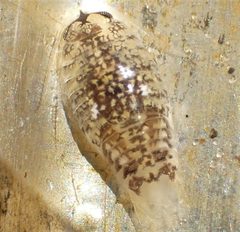
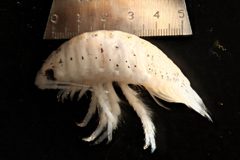
Excirolana chiltoni is a small intertidal isopod, commonly called 'sand piranha,' inhabiting sandy beaches of the Pacific Rim from Japan and Korea to Colombia. reach approximately 8 mm in length and form dense exceeding 1,000 individuals. The exhibits with direct development, a 2-year lifespan, and pronounced spatial segregation during breeding.
Pronunciation
How to pronounce Excirolana chiltoni: /ɛk.si.roʊˈlæ.nə ˈtʃɪl.toʊ.naɪ/
These audio files are automatically generated. While they are not always 100% accurate, they are a good starting point.
Images
Habitat
Intertidal zone of sandy beaches (arenicolous), specifically the beach slope. Distribution within this zone is controlled by sediment suction (soil moisture tension). In high tidal range beaches, individuals move seaward as tide level drops.
Distribution
Pacific coasts: western Pacific from Japan and Korea to South China; eastern Pacific from Pacific Northwest (USA/Canada) to Chocó, Colombia. Temperate Northern Pacific region.
Seasonality
Most active during high tides. Breeding season extends from early April to late September in northern Japan . Growth rate is high in warm season and low in winter.
Diet
Scavenger/ feeding on proteinaceous materials, primarily decaying carcasses of dead aquatic animals washed ashore.
Life Cycle
Approximately 2-year lifespan. Cohort analyses indicate two or three age groups present in . : large -filled develop in paired uteri, progressing through five intrauterine stages. Birth produces manca stage, morphologically similar to but lacking the eighth pair of thoracic legs. Oostegites are reduced and form a genital rather than a functional pouch.
Behavior
Forms swarms of more than 1,000 individuals. Exhibits tidal : in high tidal range beaches, disperses seaward as tide level drops. During breeding season, shows spatial segregation with ovigerous females on the high shore and juveniles positioned closest to the sea.
Ecological Role
Representative small benthic isopod of sandy beach intertidal zones; scavenger contributing to decomposition of marine carrion.
Human Relevance
Occasionally bites and chews on skin of beachgoers and other animals, earning the 'sand piranha.'
Sources and further reading
- BugGuide
- Wikipedia
- GBIF taxonomy match
- iNaturalist taxon
- NCBI Taxonomy
- Catalogue of Life
- Life history and utilization of the beach face slope by the sandy beach isopod Excirolana chiltoni in Sendai Bay, northern Japan
- UNIVERSAL LINKAGE BETWEEN GEOPHYSICAL ENVIRONMENT AND THE DISTRIBUTION OF ISOPOD <i>EXCIROLANA CHILTONI</i> IN SANDY BEACHES WITH DIFFERENT TIDAL RANGES
- Ovoviviparity in the genus Excirolana (Crustacea: Isopoda)