
Calliopius
Lilljeborg, 1865
Species Guides
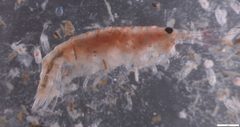
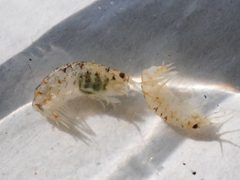
1- Calliopius laeviusculus(Planktonic Amphipod)
Calliopius is a of marine amphipods in the Calliopiidae, established by Lilljeborg in 1865. The genus comprises approximately ten described distributed across the North Atlantic and North Pacific oceans. Best-studied species include C. laeviusculus, a documented of fish in the northwestern Atlantic, and C. ulleungensis, recently described from Korean waters.
Pronunciation
How to pronounce Calliopius: /kəˈlaɪəpiəs/
These audio files are automatically generated. While they are not always 100% accurate, they are a good starting point.
Identification
within Calliopius can be distinguished by morphological features including shape, peduncle proportions, flagellar article counts, and relative size of male gnathopods. For example, C. ulleungensis has subrectangular eyes and male gnathopod 2 larger than gnathopod 1, whereas C. ezoensis has male gnathopod 1 larger than gnathopod 2.
Images
Habitat
Marine; primarily subtidal and intertidal zones. have been collected from rocky shores and from floating including Sargassum horneri.
Distribution
North Atlantic Ocean (western Atlantic from Hudson Bay to Long Island Sound; eastern Atlantic including Scandinavia and Denmark) and North Pacific Ocean (Korean waters, Japan, and Pacific coast of North America).
Seasonality
peaks occur in late spring through summer. In Newfoundland waters, young are released from spring until late summer with maximum in late summer. are larger than summer individuals.
Diet
C. laeviusculus actively preys on capelin (Mallotus villosus). Diet of other in the has not been documented.
Life Cycle
C. laeviusculus exhibits a semiannual in Newfoundland: release young in April, May, and July; April-May cohorts reach sexual maturity within summer and reproduce to produce a second peak in early August. In Labrador, only one per year occurs with spring release and autumn maturity.
Behavior
C. laeviusculus exhibits winter . shows to prey availability, with pronounced peaks matching capelin biomass.
Ecological Role
of marine fish ; demonstrate predator-prey coupling with seasonal spawning cycles of forage fish. Serves as member of benthic and epibenthic .
Sources and further reading
- BugGuide
- Wikipedia
- GBIF taxonomy match
- iNaturalist taxon
- NCBI Taxonomy
- Catalogue of Life
- Some aspects of the biology of Calliopius laeviusculus (Krøyer) (Crustacea, Amphipoda) in the northwestern Atlantic
- Match/Mismatch between the Abundance of Marine Fish Eggs and Invertebrate Predators: An Analysis of Calliopius laeviusculus (Amphipoda: Gammaridae) Population Growth Relative to the Seasonal Spawning Cycle of Capelin (Mallotus villosus)
- First record of the family Calliopiidae (Crustacea, Malacostraca, Amphipoda) from Korean waters, with description of new species Calliopiusulleungensis sp. nov.