
Hyperiidae
Dana, 1852
Genus Guides
1Hyperiidae is a of amphipod crustaceans established by Dana in 1852. Members of this family are exclusively marine and are characterized by their obligate associations with gelatinous zooplankton, including jellyfish (Scyphozoa) and ctenophores. The family contains eight recognized : Euthemisto, Hyperia, Hyperiella, Hyperoche, Laxohyperia, Parathemisto, Pegohyperia, and Themisto. These amphipods are frequently documented as or associates of their gelatinous in pelagic marine environments.
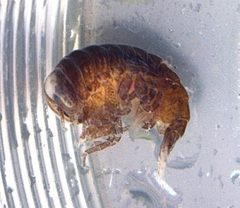
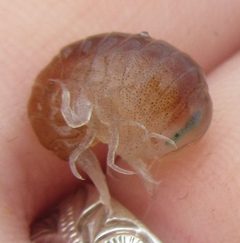
Pronunciation
How to pronounce Hyperiidae: //haɪˈpɪriˌaɪdiː//
These audio files are automatically generated. While they are not always 100% accurate, they are a good starting point.
Images
Habitat
Marine; pelagic zone. Associated with gelatinous zooplankton including jellyfish and ctenophores.
Distribution
Marine waters of the North Atlantic (Denmark, Norway, Sweden documented); southwestern Atlantic Ocean; Pacific Ocean (associated with Chrysaora fuscescens).
Host Associations
- Chrysaora fuscescens - Pacific sea nettle; documented in aquarium and natural settings
- Mnemiopsis mccradyi - associatectenophore; first record from southwestern Atlantic
- jellyfish species - multiple unspecified documented
Behavior
Obligate association with gelatinous zooplankton . Parasitic lifestyle documented on jellyfish; exact nature of association ( vs. commensalism) varies by and context.
Ecological Role
of gelatinous zooplankton. Role in marine pelagic not fully characterized.
Human Relevance
Documented as pests in aquarium systems housing jellyfish, requiring pharmaceutical intervention (milbemycin oxime) or physical methods for management in captivity.
Sources and further reading
- BugGuide
- Wikipedia
- GBIF taxonomy match
- iNaturalist taxon
- NCBI Taxonomy
- Catalogue of Life
- MILBEMYCIN OXIME (INTERCEPTOR) TREATMENT OF AMPHIPOD PARASITES (HYPERIIDAE) FROM SEVERAL HOST JELLYFISH SPECIES
- HYPEROCHE MEDUSARUM (KRØYER, 1838) (AMPHIPODA, HYPERIIDAE) AND MNEMIOPSIS MCCRADYI (MAYER, 1910) (CTENOPHORA): A NEW HOST AND FIRST RECORD OF THIS ASSOCIATION FOR THE SOUTHWESTERN ATLANTIC
- A Method for Eradicating Amphipod Parasites (Hyperiidae) from Host Jellyfish, Chrysaora fuscescens (Brandt, 1835), in a Closed Recirculating System