
Palaemon pugio
(Holthuis, 1949)
daggerblade grass shrimp
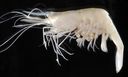
Palaemon pugio, commonly known as the daggerblade grass shrimp, is a small, transparent caridean shrimp native to estuarine and tidal marsh of the western Atlantic Ocean and Gulf of Mexico. reach approximately 5 cm in length and exhibit yellow coloration with brownish spots. This serves as an important ecological component in salt marsh , accounting for a substantial portion of nekton and functioning as prey for commercially important fish species. The species has become a standard test organism in toxicological research due to its sensitivity to environmental pollutants.

Pronunciation
How to pronounce Palaemon pugio: /pæˈliːmən ˈpjuːɡi.oʊ/
These audio files are automatically generated. While they are not always 100% accurate, they are a good starting point.
Identification
Distinguished from similar grass shrimp by combination of: smooth and ; third pair of legs lacking chelae; yellow transparent body with brownish spots. The 'pugio' (Latin for dagger) alludes to the blade-like form. Precise field identification to species level may require examination of appendage , as grass shrimp species are morphologically similar.
Images
Habitat
Estuarine and tidal marsh ; tidal creek-salt marsh systems. Epibenthic lifestyle within tidal creek-salt marsh systems. Occupies brackish water environments with variable salinity.
Distribution
Western Atlantic Ocean and Gulf of Mexico; estuaries along the east coast of North America from at least South Carolina northward. Documented from Leadenwah Creek, Wadmalaw Island, South Carolina.
Diet
Forager feeding on microalgae and zooplankton. Larvae feed on zooplankton in surface waters. In laboratory settings, accepts brine shrimp nauplii (Artemia) and fish flakes.
Life Cycle
Embryonic development: embryos carried by gravid females, with stage VI embryos (oval eyespots, rapid heartbeat) indicating imminent hatching. Larval stage: hatch at ~2.6 mm length, 2 days post-hatch at start of free development; characterized by upside-down and backwards swimming. Larvae reach 6–8 mm at . to stage typically occurs between 15–22 days; juveniles swim side up and forwards. Can survive ~10 days without food but requires food to transition beyond second larval instar. Lifespan approximately one year.
Behavior
Larval stage exhibits upside-down and backwards swimming; stage exhibits side up and forward swimming. Accounts for approximately 83% of total nekton in its .
Ecological Role
Ecologically important estuarine playing vital role in energy cycling within tidal creek-salt marsh . Key component of salt marsh . Functions as prey for various including killifish and other small foraging fish, as well as commercially and recreationally important seafood species. Links to higher in estuarine .
Human Relevance
Used as a standard aquatic test organism for assessment in ecotoxicological research, including studies of microplastic pollution and household consumer product toxicity. Subject of research on developmental impacts of environmental contaminants. Potential for estuarine health.
Similar Taxa
- Palaemonetes species (other grass shrimp)Morphologically similar small estuarine shrimp; distinguished by details of rostrum , appendage proportions, and color pattern
- Palaemon carteri / P. ivonicusAmazonian with similar general form; distribution prevents overlap
Sources and further reading
- BugGuide
- Wikipedia
- GBIF taxonomy match
- iNaturalist taxon
- NCBI Taxonomy
- Catalogue of Life
- Rising from the Ashes--Some Day | Bug Squad
- Dicerca pugionata – safe and sound! | Beetles In The Bush
- Two beauties doubling down on defense: The polka-dot wasp moth, Syntomeida epilais, and spotted oleander caterpillar moth, Empyreuma pugione — Bug of the Week
- Uncategorized | Blog - Part 18
- Beetle botanists | Beetles In The Bush
- 9th Annual Fall Tiger Beetle Trip: Day 1 | Beetles In The Bush
- Are Green Household Consumer Products Less Toxic than Conventional Products? An Assessment Involving Grass Shrimp (Palaemon pugio) and Daphnia magna.
- Assessment of acute toxicity and developmental transformation impacts of polyethylene microbead exposure on larval daggerblade grass shrimp (Palaemon pugio).