
Palaemonidae
Rafinesque, 1815
palaemonid shrimps
Genus Guides
1- Palaemon(Glass Shrimps)
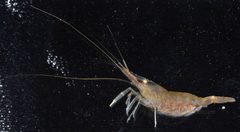
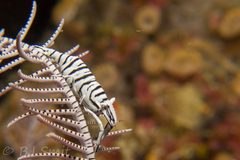
Palaemonidae is a large of caridean shrimp comprising over 1,200 in approximately 160 . The family exhibits remarkable ecological diversity, inhabiting marine, estuarine, and freshwater environments worldwide except the deep sea. Two historically recognized —Palaemoninae and Pontoniinae—were merged in 2015 based on molecular and morphological evidence, with former families Gnathophyllidae and Hymenoceridae also incorporated. Members display varied feeding strategies including carnivory, detritivory, and symbiotic associations with . The genus Macrobrachium contains commercially significant species supporting fisheries and aquaculture globally.

Pronunciation
How to pronounce Palaemonidae: /ˌpæl.iːˈmɒnɪˌdiː/
These audio files are automatically generated. While they are not always 100% accurate, they are a good starting point.
Images
Habitat
Marine, estuarine, and freshwater (limnic) environments. Absent from deep sea. Freshwater has occurred repeatedly from marine ancestors, with some completing entire in freshwater while others require saltwater for larval development.
Distribution
Worldwide distribution across tropical and temperate regions. Present in Atlantic, Pacific, and Indian Ocean drainages. Specific distribution records from Denmark, Norway, and Sweden in GBIF database.
Diet
Variable across the : carnivory on small (documented in Palaemoninae), detritivory (common in Pontoniinae), and specialized feeding modes including cleaning and on invertebrates.
Host Associations
- sponges - commensalism or cleaning Pontoniinae associate with sponges as cleaner shrimps or commensals
- cnidarians - commensalism or cleaning Pontoniinae associate with cnidarians as cleaner shrimps or commensals
- mollusks - commensalism or cleaning Pontoniinae associate with mollusks as cleaner shrimps or commensals
- echinoderms - commensalism or cleaning Former Gnathophyllidae members and Pontoniinae associate with echinoderms; includes parasitic, commensal, and cleaning relationships
- ascidians (tunicates) - endosymbiosisSome live inside tunicate cavities, with fully adapted small smooth bodies
- gorgonians - commensalismPericlimenes associate with plexaurid gorgonians such as Muricea and Plexaurella
- burrowing animals - inquilinismFew recorded living in burrows constructed by other animals, including stomatopods, echiurans, and ghost/mud shrimps; much less diverse than Alpheidae in this regard
Life Cycle
Complex strategies including: (1) complete freshwater cycles with hyper- from hatching (e.g., Macrobrachium pantanalense); (2) diadromous patterns with freshwater exporting larvae to estuaries requiring saltwater for development (e.g., Macrobrachium amazonicum, Cryphiops caementarius); (3) upstream driven by metabolic responses to temperature changes. Eleven distinct larval stages documented in some . Recruitment periods vary seasonally; in Macrobrachium acanthurus, recruitment extends October to May with reproductive peak April–September.
Behavior
upstream in riverine triggered by metabolic responses to acute temperature changes. Thermal sensitivity (Q10) varies with salinity, showing defined patterns in brackish waters below 20‰. Some species exhibit specialized burrow-association, though less diverse than in Alpheidae.
Ecological Role
Cleaner shrimp services on coral reefs; nutrient cycling through detritivory; prey for higher in freshwater and marine .
Human Relevance
Commercially fished in Macrobrachium support artisanal fisheries (e.g., M. acanthurus in Brazil, M. amazonicum in Amazon basin). Aquaculture of Macrobrachium rosenbergii introduced to Mexico (1973) and cultivated in China, India, Thailand. High larval mortality in culture (89–90%) due to infectious and protozoan via food sources.
Similar Taxa
- AlpheidaeBoth contain symbiotic shrimp with associations, but Alpheidae exhibit far greater diversity of burrow-dwelling and possess distinctive snapping claws absent in Palaemonidae
- AtyidaeBoth contain freshwater caridean shrimp, but Atyidae lack the complex larval export strategies and osmoregulatory adaptations to salinity variation seen in many Palaemonidae
Sources and further reading
- BugGuide
- Wikipedia
- GBIF taxonomy match
- iNaturalist taxon
- NCBI Taxonomy
- Catalogue of Life
- marine animals | Blog
- Uncategorized | Blog - Part 18
- Reproductive Biology of Palaemon Gravieri (Decapoda: Caridea: Palaemonidae)
- Tasa respiratoria de Cryphiops caementarius (CRUSTACEA, PALAEMONIDAE): explicación de la migración juvenil. RESP1RATORY RATE OF CRYPHIOPS CAEMENTARIUS (CRUSTACEA, PALAEMONIDAE): REASONS FOR JUVENILES MIGRATION
- Mécanismes osmorégulateurs et adaptation évolutive des crevettes Palaemonidae aux milieux estuariens
- The ecology of a predatory shrimp, macrobrachium hainanense (Parisi, 1919) (Decapoda : palaemonidae), in Hong Kong streams
- Peer Review #2 of "Insights into the morphology of symbiotic shrimp eyes (Crustacea, Decapoda, Palaemonidae); the effects of habitat demands (v0.1)"
- Fauna Associated with Artemia salina Used to Feed Larvae of Macrobrachium rosenbergii (Decapoda: Palaemonidae) in Culture
- Peer Review #1 of "Insights into the morphology of symbiotic shrimp eyes (Crustacea, Decapoda, Palaemonidae); the effects of habitat demands (v0.1)"
- Further records of burrow-associated palaemonid shrimps (Decapoda: Palaemonidae)
- A new species of Periclimenes (Crustacea: Decapoda: Palaemonidae) from Guarapari, Espirito Santo, Brazil
- Some aspects of the taxonomy, behaviour and biology of the freshwater prawn, Macrobrachium australiense Holthuis 1950 (Crustacea : Decapoda : Palaemonidae)
- Population structure of freshwater prawn Macrobrachium amazonicum (Crustacea, Palaemonidae) in two regions of the Amazon River, Brazil Estructura poblacional del camarón de agua dulce Macrobrachium amazonicum (Crustacea, Palaemonidae) en dos regiones del río Amazonas, Brasil
- BIOLOGIA E PESCA DO CAMARÃO-CANELA, Macrobrachium acanthurus (CRUSTACEA, PALAEMONIDAE), NO ESTUÁRIO DO RIO JAPARATUBA, ESTADO DE SERGIPE Biology and fishery of the freshwater prawn, Macrobrachium acanthurus (Crustacea, Palaemonidae), in the Japaratuba River’s estuary, Sergipe State
- Freshwater colonization drives divergent reproductive strategies in shrimps of the genus Palaemon (Decapoda: Palaemonidae).