
Lysmata
Risso, 1816
cleaner shrimp, peppermint shrimp
Species Guides
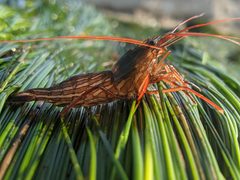
1- Lysmata californica(red rock shrimp)
Lysmata is a of marine caridean shrimp distinguished by its unique sexual system of protandric simultaneous hermaphroditism. The genus includes two main ecological groups: cleaner shrimp that live in pairs and remove from fish, and peppermint shrimp that often live in and consume pest anemones. All studied begin life as males before maturing into functional simultaneous capable of both producing and fertilizing . Members of this genus are heavily targeted by the ornamental aquarium trade, with some species commanding high prices.
Pronunciation
How to pronounce Lysmata: /lɪsˈmeɪtə/
These audio files are automatically generated. While they are not always 100% accurate, they are a good starting point.
Identification
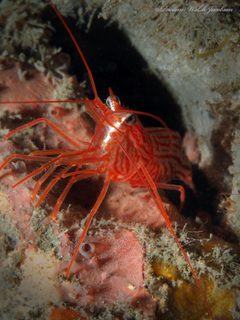
Cleaner shrimp exhibit bright contrasting colors, often red and yellow with white , and possess cleaning adaptations for removing from fish. Peppermint shrimp display semi-translucent bodies with red banding. Accurate identification to species level requires examination of color pattern combined with morphological traits or , as congeneric species show remarkable similarity in external . Diagnostic features include proportions of maxilliped segments and stylocerite length relative to the .
Images
Habitat
Marine environments in tropical and warmer temperate waters. occupy rock and coral reefs in both shallow and deeper areas. Some species inhabit intertidal fossil coral terraces at depths of 0.5–2 m, while others occur in sponges. The shows variation in lifestyle: some species develop symbiotic associations with , while others maintain a non-symbiotic existence in low abundance.
Distribution
Global distribution in tropical and subtropical marine waters. Documented from the Caribbean coast of Panama, eastern Gulf of Mexico, Lakshadweep Islands in the Arabian Sea, and Southern California. Lysmata boggessi is to the eastern Gulf of Mexico. Lysmata hochi was first recorded from the Indian Ocean based on specimens from Lakshadweep Islands.
Life Cycle
Protandric simultaneous hermaphroditism: individuals first mature as functional males (male phase), then transition to functional simultaneous (euhermaphrodite phase). Male-phase individuals possess cincinulli on the first pair of pleopods and appendices masculinae on the second pair, with at the of the third legs and ovotestes dominated by developed male tissue. Euhermaphrodite-phase individuals lack cincinulli and appendices masculinae but retain male gonopores, with ovotestes containing well-developed ovaries with mature alongside functional . Males can mature as hermaphrodites in under 50 days when paired. incubation lasts approximately 2–3 weeks at 26–28°C.
Behavior
Cleaner shrimp perform removal from fish, with pairs taking turns fertilizing each other's during reciprocal spawning. Some peppermint shrimp exhibit cleaning but less actively than dedicated cleaner . Peppermint shrimp species often live in large , while cleaner shrimp maintain pair bonds. Postmolt behaviors include feeding, cleaning, and startle responses that may be affected by environmental stressors.
Ecological Role
Cleaner shrimp provide mutualistic cleaning services to reef fish by removing and dead tissue. Peppermint shrimp contribute to control of pest sea anemones, particularly Aiptasia , in reef . The represents a significant component of targeted ornamental fisheries, with intensive collection potentially impacting coral reef through direct damage and depletion.
Human Relevance
Highly valued in the marine aquarium trade for bright coloration, interesting , and of pest anemones. Lysmata boggessi is the most heavily traded peppermint shrimp worldwide due to intensity of the US market, contrary to previous assumptions about L. wurdemanni dominance. Misidentification in the trade is common and accidental due to morphological similarity among species. Collection pressures raise conservation concerns, particularly given that L. boggessi comprises a single genetically homogeneous stock across 550 km of coastline. Captive breeding has been demonstrated as feasible using standard penaeid aquaculture techniques.
Similar Taxa
- StenopusBoth contain cleaner shrimp targeted by the ornamental trade, but Stenopus are larger, exhibit banded color patterns of red and white rather than the red-yellow-white combinations of Lysmata cleaner shrimp, and possess different without protandric simultaneous hermaphroditism.
- RhynchocinetesDancing shrimp in this may be confused with peppermint shrimp due to similar body size and banding, but Rhynchocinetes have distinctive upward-curved rostrums and different reproductive .
Misconceptions
Lysmata wurdemanni was long believed to be the peppermint shrimp in the US ornamental trade, but market surveys revealed that Lysmata boggessi is actually the most heavily traded worldwide. This misidentification persisted due to remarkable morphological and color pattern similarity among congeneric species.
More Details
Taxonomic placement
The has been transferred between , currently placed in Lysmatidae but historically assigned to Hippolytidae. Recent cladistic analysis supports retention in Lysmatidae.
Genetic homogeneity
Lysmata boggessi shows no genetic structure across 550 km of linear coastline, indicating a single fished stock requiring unified management approaches.
Self-fertilization
Experimental evidence demonstrates that isolated cannot reproduce; spawned in isolation fail to develop and disappear within 2 days, confirming obligate outcrossing.
Sources and further reading
- BugGuide
- Wikipedia
- GBIF taxonomy match
- iNaturalist taxon
- NCBI Taxonomy
- Catalogue of Life
- Protandric simultaneous hermaphroditism in the shrimps Lysmata bahia and Lysmata intermedia
- Preliminary observations on the reproductive biology of ornamental cleaner prawns Stenopus hispidus Lysmata amboinensis Lysmata debelius
- Table S2: Information on the life history of Lysmata boggessi and L. wurdemanni
- Two new records of hippolytoid shrimps, Lysmata hochi Baeza & Anker, 2008 (Decapoda: Lysmatidae) and Lysmata amboinensis (de Man, 1888) from Lakshadweep Islands, India with taxonomic notes
- Postmolt behavior of red rock shrimp, Lysmata californica, exposed to ocean acidification and warming conditions
- Reproductive Ecology of a Protandric Simultaneous Hermaphrodite, the Shrimp Lysmata Wurdemanni (Decapoda: Caridea: Hippolytidae)