
Crangonidae
Haworth, 1825
crangonid shrimps, sand shrimps, brown shrimps
Genus Guides
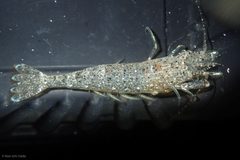
1Crangonidae is a of marine shrimp in the superfamily Crangonoidea, containing 24 and including the commercially important Crangon crangon, the common brown shrimp. Members are primarily benthic, inhabiting coastal to deep-water sediments. The family is distinguished by partially chelate first pereiopods used in prey capture. Two fossil species are known: Crangon miocenicus from the early Miocene of Russia and Morscrangon acutus from the early Eocene of Denmark.

Pronunciation
How to pronounce Crangonidae: //kræŋˈɡɒnɪˌdeɪ//
These audio files are automatically generated. While they are not always 100% accurate, they are a good starting point.
Identification
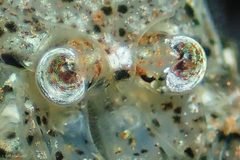
Crangonidae can be distinguished from other caridean by the first pair of pereiopods bearing partially chelate claws adapted for capturing prey. Members typically have a robust, somewhat compressed body form suited for benthic life. The family differs from the related Glyphocrangonidae, which often possess more pronounced spination and different claw .
Images
Habitat
Benthic marine environments ranging from shallow coastal waters to deep waters (300–1200 m documented). burrow shallowly into sediment on the sea floor.
Distribution
Widespread in marine waters; documented from the North Sea, White Sea, Irish Sea, Gulf of Mexico, and waters off Baja California, Mexico. GBIF records indicate presence in Denmark, Norway, and Sweden.
Diet
Benthic feeding on polychaetes, bivalves, crustaceans, malacostracans, ophiuroids, opisthobranchs, and small fish; also consumes detritus and plant remains. Crangon allmanni has been observed to employ multiple foraging modes including grazing, gathering, and attacking , with mode shifting during ontogenesis.
Behavior
Burrowing : individuals burrow shallowly into sediment. Feeding behavior involves use of partially chelate first pereiopods to capture prey. Foraging mode varies with life stage and conditions; Crangon allmanni shifts between grazing, gathering, and attacking .
Ecological Role
Benthic -gatherers with elements of detritivory and necrophagy; contribute to sediment processing and nutrient cycling. Use grains of sand as millstones in their gastric mill.
Human Relevance
Crangon crangon is commercially important and harvested as food. The includes of interest for deep-water biodiversity surveys and taxonomic research.
Similar Taxa
- GlyphocrangonidaeSuperficially similar deep-water benthic shrimp, but distinguished by more pronounced spination, different claw , and generally higher abundance in deep trawl surveys (1125 individuals vs. 21 for Crangonidae in one Gulf of Mexico study).
- PalaemonidaeBoth are caridean with benthic representatives, but Palaemonidae typically possess fully chelate second pereiopods and differ in rostrum structure.
More Details
Fossil record
Two fossil are documented: Crangon miocenicus (early Miocene, north Caucasus, Russia, described 2001) and Morscrangon acutus (early Eocene, Fur Formation, Denmark, described 2006).
Sources and further reading
- BugGuide
- Wikipedia
- GBIF taxonomy match
- iNaturalist taxon
- NCBI Taxonomy
- Catalogue of Life
- Feeding Behavior of the Horned Shrimp, Paracrangon echinata (Caridea: Crangonidae)
- Crangonidae and Glyphocrangonidae (Decapoda; Caridea) of the Southern Gulf of Mexico
- Female Reproductive Biology of ShrimpCrangon crangon(L.) (Decapoda, Crangonidae)
- Feeding ecology of the shrimp Crangon allmanni Kinahan, 1860 (Decapoda, Crangonidae) in the North and White seas
- Reproductive biology of the common shrimp Crangon crangon (Decapoda: Crangonidae) in the central Irish Sea
- Deep-water species of Crangonidae and Glyphocrangonidae (Decapoda, Caridea) collected during the TALUD XV cruise off the west coast of southern Baja California, Mexico