
Portunus sayi
(Gibbes, 1850)
Sargassum Swimming Crab
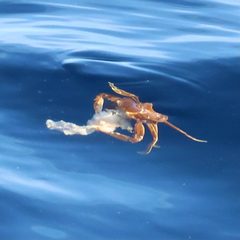
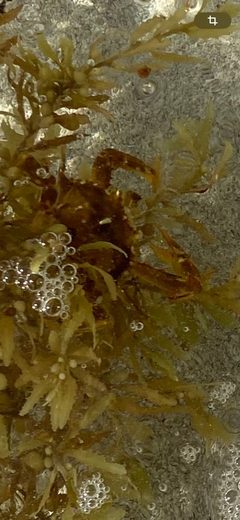
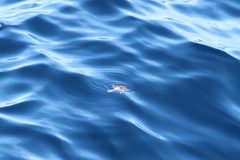
Portunus sayi is a pelagic swimming crab to floating Sargassum seaweed mats in the western Atlantic Ocean and Caribbean Sea. It exhibits specialized adaptations for swimming, including paddle-shaped fourth legs that enable rapid sideways movement. The relies on chemical, visual, and tactile cues to locate and select Sargassum patches, demonstrating strong host fidelity. Recent records from the Amazon continental shelf represent the northernmost observation in Brazilian waters, expanding its known range.
Pronunciation
How to pronounce Portunus sayi: //pɔrˈtuːnəs ˈsaɪ.i//
These audio files are automatically generated. While they are not always 100% accurate, they are a good starting point.
Identification
nearly twice as broad as long with six interorbital teeth; smooth, shiny surface. Chelipeds larger in males than females, with spines bearing orange margins. Coloration typically pale brown with large white or flesh-colored blotches, sometimes with purplish or greenish tinge. Fourth pair of legs modified into flattened, paddle-like structures for swimming. Distinguished from other portunid crabs by association with pelagic Sargassum and specific carapace tooth arrangement.
Images
Habitat
Pelagic marine environment associated with floating Sargassum seaweed mats; occurs in scattered Sargassum patches pushed toward shoreline by wind, waves, currents, or tides. Found at depths down to 18 meters in western Atlantic ; recorded at depths up to 70 meters on Amazon continental shelf. Patches frequently less than 1 meter apart and in depths of 10 cm or less as they approach shoreline.
Distribution
Western Atlantic Ocean from Nova Scotia and Gulf of Maine south to southern Florida, Bermuda, Bahamas, and Gulf of Mexico; Caribbean Sea. Northernmost Brazilian record from Amazon continental shelf off Amapá state, associated with Great Amazon Reef System.
Host Associations
- Sargassum spp. - obligate symbiotic Crab makes home among floating mats; uses chemical cues to select Sargassum over other seaweeds
- Thalassia testudinum - rejected Actively avoided despite being similar seaweed; chemical detection enables discrimination
Behavior
Uses chemoreception to detect Sargassum chemicals for location; visually locates host but cannot distinguish between different host types. Must relocate to seaward patches when current patch becomes beached or perish. Swims sideways rather than forwards; capable of surprisingly rapid movement.
Ecological Role
Member of unique and diverse of symbiotic fauna associated with pelagic Sargassum mats; contributes to pelagic . Presence on Amazon continental shelf indicates ecological importance of Great Amazon Reef System as biodiversity hotspot. Collected as bycatch in industrial fisheries, indicating exposure to fishing pressure.
Human Relevance
Collected as bycatch in southern red snapper (Lutjanus purpureus) fishery using manzuá fish traps; lacks commercial value and subsequently discarded. Named in honor of American naturalist Thomas Say.
Similar Taxa
- Other Portunus speciesDistinguished by obligate association with pelagic Sargassum versus benthic or coastal habitats of
- Thalassia-associated decapodsP. sayi specifically selects Sargassum over Thalassia testudinum through chemical cue detection
Sources and further reading
- BugGuide
- Wikipedia
- GBIF taxonomy match
- iNaturalist taxon
- NCBI Taxonomy
- Catalogue of Life
- From Caterpillars to Butterflies to Chronic Pain Research | Bug Squad
- Bruce Hammock: From ResearchIng Insect Science to Researching Autism and Schizophrenia | Bug Squad
- Bug Eric: Stop Saying the Monarch is a "Gateway Species" for an Appreciation of Other Insects
- Bug Eric: Spider Sunday: Funnel-web Wolf Spiders
- Termite Experts Attempt to Solve Taxonomic Cold Cases
- New comment policy | Beetles In The Bush
- NEW RECORD OF THE SWIMMING CRAB Portunus sayi (GIBBES, 1850) (DECAPODA: PORTUNIDAE) FROM THE AMAZON CONTINENTAL SHELF
- Host location and selection by the symbiotic sargassum crab Portunus sayi: the role of chemical, visual and tactile cues