
Pinnotheridae
De Haan, 1833
pea crabs, bivalve pea crabs
Genus Guides
2- Dissodactylus(pea crab)
- Pinnixa(pea crabs)
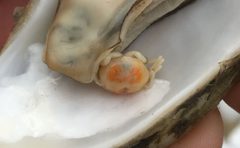
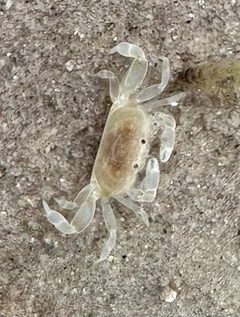
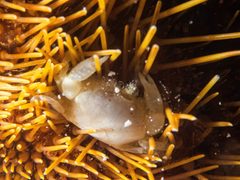
Pinnotheridae is a of minute, soft-bodied crabs commonly known as pea crabs. Members are obligate that inhabit the mantles of bivalve molluscs, with occasional associations with large gastropods ( Strombus and Haliotis), echinoids, holothurians, and ascidians. The family exhibits extensive morphological adaptations for symbiotic life, including reduced calcification and specialized feeding structures. Fossil records extend to the Danian (Early Paleocene).
Pronunciation
How to pronounce Pinnotheridae: //pɪn.oʊˈθɛr.ɪˌdiː//
These audio files are automatically generated. While they are not always 100% accurate, they are a good starting point.
Identification
Distinguished from other brachyuran by combination of: minute size, soft and poorly calcified body, obligate symbiotic lifestyle in , and wider than long. Within Thoracotremata, differs from Cryptochiridae (gall crabs) by host association (bivalves/molluscs vs. corals) and from free-living families by reduced calcification and symbiotic . -level identification requires examination of carapace shape, third maxilliped structure, and morphology.
Images
Appearance
Tiny crabs with soft, poorly calcified bodies. typically wider than long, often subcircular, subquadrate, or subheptagonal in outline. Size generally small, with many pea-sized (hence ). Chelipeds often equipped with setal combs for feeding. Third maxilliped with distinct lateral exopod lobe in many . common, with females often larger and occupying mantles while males may be free-living or transient.
Habitat
Strictly symbiotic, inhabiting mantle cavities of bivalve molluscs (primary ), with some in gastropods, echinoid burrows, holothurians, or ascidians. Hosts include mussels, oysters, pen shells, scallops, date mussels, and burrowing echiurids/thalassinideans. Marine and estuarine environments; distribution constrained by host availability.
Distribution
Worldwide in marine and estuarine waters where occur. Documented from northeastern Pacific (Alaska to tropical Mexico), Caribbean, European waters, Solomon Islands, Japan, and Iranian Gulf of Oman. Specific range extensions documented: Fabia subquadrata to southern Baja California; Pinnaxodes gigas >1000 km north of Gulf of California to San Quintín.
Diet
Feeds on food particles filtered or captured by organisms. Observed feeding mechanism involves brushing mucus strings from host gills using setal combs on chelipeds. Some cause tissue on hosts through feeding activity.
Host Associations
- Bivalvia - primary Mantle cavity ; includes mussels, oysters, pen shells, scallops
- Gastropoda - occasional Strombus and Haliotis
- Echinoidea - Dissodactylus primitivus in Meoma ventricosa and Plagiobrissus grandis
- Holothuroidea - Some
- Ascidiacea - Tunicotheres moseri commensal with tunicate; Nepinnotheres pinnotheres in ascidians
- Echiura - Scleroplax granulata in Urechis caupo burrows
- Thalassinidea - Scleroplax granulata in Neotrypaea and Upogebia burrows
Life Cycle
Development includes planktonic larval stages (zoeae, megalopae) before settlement in . Asymmetrical documented in some : occurs on multiple host species but recruitment restricted to specific host. Sexual maturity attained within host; males may leave hosts to seek females.
Behavior
Obligate with limited free-living . Males demonstrate greater mobility than females, moving between to locate mates. Chemical host location ability demonstrated. Feeding behavior involves active extraction of food from host using specialized appendages. Some exhibit polygynandrous mating systems with mobile females.
Ecological Role
Symbiotic residents in mantle cavities; impact on hosts ranges from commensalism to . Feeding activity can cause gill tissue damage and reduced host (documented in Dissodactylus primitivus affecting Meoma ventricosa development). Serve as food for predatory vertebrates including frogs.
Human Relevance
Occasionally collected as bycatch in bivalve fisheries. Some enter ornamental trade inadvertently with molluscs. No significant direct economic impact; minor negative impact as of commercially valuable bivalves.
Similar Taxa
- CryptochiridaeAlso symbiotic Thoracotremata, but gall crabs inhabiting coral structures rather than mollusc mantles; morphologically convergent but phylogenetically distinct
- Free-living PinnotheroideaRelated lack obligate , reduced calcification, and specialized feeding adaptations
More Details
Morphological Adaptations
Extensive ecomorphological adaptations documented: size/shape/orientation, frontal appendage reduction, mouthpart specialization, cheliped setation, ambulatory leg modification, and reproductive anatomy all modified for symbiotic life. common: unrelated with similar interactions display identical adaptations.
Taxonomic Complexity
60+ in 23+ ; complicated by -associated morphological plasticity and . Molecular markers (microsatellites) developed for studies.
Fossil Record
Earliest definitive fossils from Danian (Early Paleocene), indicating ancient origin of symbiotic lifestyle.
Sources and further reading
- BugGuide
- Wikipedia
- GBIF taxonomy match
- iNaturalist taxon
- NCBI Taxonomy
- Catalogue of Life
- Zookeys | Blog - Part 30
- The Pinnotheridae of the northeastern Pacific (Alaska to Mexico): zoogeographical remarks and new bivalve hosts (Crustacea, Brachyura, Pinnotheridae)
- Host specificity and feeding in European pea crabs (Brachyura, Pinnotheridae)
- Host specificity and feeding in European pea crabs (Brachyura, Pinnotheridae)
- Systematics of the genus Scleroplax Rathbun, 1893 (Crustacea: Brachyura: Pinnotheridae)
- Modalités fonctionnelles et évolutives des parasitoses développées par les crabes Pinnotheridae aux dépens des échinides fouisseurs
- A Review of the Ecomorphology of Pinnotherine Pea Crabs (Brachyura: Pinnotheridae), with an Updated List of Symbiont-Host Associations
- Phylomitogenomics elucidates the evolution of symbiosis in Thoracotremata (Decapoda: Cryptochiridae, Pinnotheridae, Varunidae).