
Dyspanopeus
Martin & Abele, 1986
Species Guides
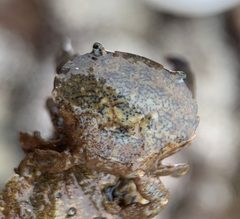
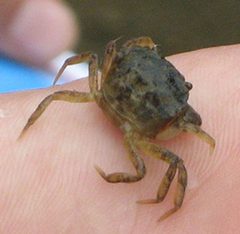
1- Dyspanopeus sayi(Say's mud crab)
A of mud crabs in the Panopeidae, comprising two : D. sayi and D. texanus. The genus was erected in 1986 based on distinctive pleopod that separates these species from the closely related genus Panopeus. D. sayi has become a notable in European waters, with established in the Black Sea, Mediterranean, and Sea of Azov.
Pronunciation
How to pronounce Dyspanopeus: /dɪsˌpænəˈpiːəs/
These audio files are automatically generated. While they are not always 100% accurate, they are a good starting point.
Identification
Distinguished from the related Panopeus by the form of the pleopods, which differ markedly in structure. This morphological distinction was the basis for the 1986 generic separation. -level identification within the genus requires examination of specific morphological characters not detailed in available sources.
Images
Habitat
Transitional waters between continental water bodies and the sea; mud .
Distribution
Native to the western Atlantic coast of North America. range includes the Atlantic coast of Europe, the northern Mediterranean Sea, the western Black Sea (first recorded off Romania in 2009), and the Sea of Azov (first recorded 2022).
Diet
Bivalve prey; has been observed feeding on Mytilus edulis.
Behavior
Exhibits that is influenced by rather than structural complexity. Predatory includes active prey selection and preference for bivalve prey.
Ecological Role
on bivalve ; successful invader with potential impacts on native bivalve in introduced ranges.
Human Relevance
D. sayi is an active of concern for marine biosecurity. Its spread has been facilitated by anthropogenic means, particularly ballast water transport. Monitoring of its distribution is important for predicting consequences for local and in invaded regions.
Similar Taxa
- PanopeusFormerly included within Panopeus; separated based on pleopod . The two are closely related and share Panopeidae, requiring careful examination of pleopod structure for accurate identification.
Sources and further reading
- BugGuide
- Wikipedia
- GBIF taxonomy match
- iNaturalist taxon
- NCBI Taxonomy
- Catalogue of Life
- Predator density, not structure, influences intraspecific competition in the mud crab Dyspanopeus sayi
- Predatory behavior and preference of a successful invader, the mud crab Dyspanopeus sayi (Panopeidae), on its bivalve prey
- FINDING OF THE MUD CRAB <i>DYSPANOPEUS SAYI </i>(S. I. SMITH, 1869) (BRACHYURA: XANTHOIDEA: PANOPEIDAE) IN THE SEA OF AZOV