
Loxorhynchus
Stimpson, 1857
masking crabs, moss crabs, sheep crabs
Species Guides
2- Loxorhynchus crispatus(masking crab)
- Loxorhynchus grandis(Sheep Crab)
Loxorhynchus is a of spider crabs in the Epialtidae, found in the eastern Pacific Ocean. The genus includes three described : L. crispatus (masking crab or moss crab), L. grandis (sheep crab), and L. guinotae. Members of this genus are known for decorating , in which they attach materials from their environment to their .
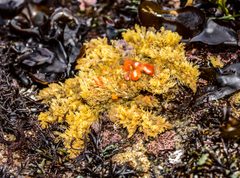
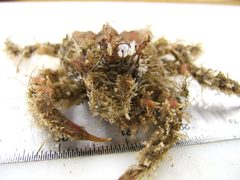
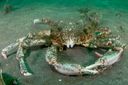
Pronunciation
How to pronounce Loxorhynchus: /ˌlɒksəˈrɪŋkəs/
These audio files are automatically generated. While they are not always 100% accurate, they are a good starting point.
Identification
Loxorhynchus can be distinguished from other epialtid crabs by their prominent rostrum with divergent spines and elongated, slender chelipeds. L. crispatus and L. grandis are larger-bodied species with tuberculate ; L. crispatus has a more densely spiny carapace surface compared to L. grandis. L. guinotae is a smaller, less spiny species described from deeper waters off Mexico.
Images
Habitat
Eastern Pacific marine environments. Specific preferences vary by : L. crispatus and L. grandis occur in shallow coastal waters including rocky substrates and kelp forests, while L. guinotae has been documented from deeper continental shelf habitats (200-400 m depth) off the Pacific coast of Mexico.
Distribution
Eastern Pacific Ocean, from Alaska to Baja California and the Gulf of California, with L. guinotae extending south to Oaxaca, Mexico. Distribution records from GBIF indicate presence in Norway and Sweden, though these likely represent misidentifications or data entry errors given the well-documented eastern Pacific .
Behavior
Documented decorating in L. crispatus and L. grandis: individuals actively attach , hydroids, sponges, and other materials to hooked setae on the and appendages. Decorating behavior has been observed to resume shortly after molting, with crabs beginning to re-cover their soft new within hours of .
Similar Taxa
- PugettiaAlso an epialtid spider crab with decorating , but distinguished by a shorter rostrum and different ornamentation; Pugettia generally lack the pronounced rostral spines characteristic of Loxorhynchus.
- MajaEuropean and Atlantic spider crabs with superficially similar body form, but occur outside the eastern Pacific range of Loxorhynchus and lack the specific rostral .
More Details
Taxonomic Note
The placement of Loxorhynchus has varied in literature. NCBI lists Majidae, while current consensus (Catalogue of Life, WoRMS) places the in Epialtidae Pisinae. This reflects historical reclassification of majoid crabs as phylogenetic relationships have been refined.
Research Limitations
Most behavioral studies focus on L. crispatus and L. grandis. L. guinotae, described in 2003, remains poorly known biologically; no published studies of its decorating or were accessible.
Sources and further reading
- BugGuide
- Wikipedia
- GBIF taxonomy match
- iNaturalist taxon
- NCBI Taxonomy
- Catalogue of Life
- Decorating Behavior in Loxorhynchus Crispatus Stimpson and Loxorhynchus Grandis Stimpson (Brachyura, Majidae)
- Observations On Decorating Behavior Following Molting in Loxorhynchus Crispat Us Stimpson (Decapoda, Majidae)