
Procambarus acutus
(Girard, 1852)
White River Crayfish
Species Guides
1- Procambarus acutus acutus(White River crayfish)
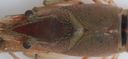
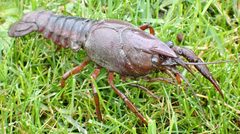
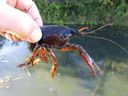
Procambarus acutus, commonly known as the white river crayfish, is a freshwater crayfish in the Cambaridae native to eastern North America. The species exhibits a disjunct native distribution spanning from the Atlantic Slope to the Gulf of Mexico drainages. It has been introduced to multiple regions outside its native range, including parts of Europe and Africa, where it poses potential ecological and economic risks. Two are recognized: P. a. acutus and P. a. cuevachicae.
Pronunciation
How to pronounce Procambarus acutus: /proʊˈkæmbərəs əˈkjuːtəs/
These audio files are automatically generated. While they are not always 100% accurate, they are a good starting point.
Images
Habitat
Native occupy diverse freshwater including small streams, roadside ditches, farm ponds, and lentic systems. In New England, the has been documented in small streams, roadside ditches, and farm ponds. In Ontario, Canada, established populations occur in ponds, ditches, and lake systems. The species constructs burrows in soft substrates, including ditch banks near aquatic habitats.
Distribution
Native range includes the Atlantic Slope from Maine to Georgia and into Canada, as well as the southern Great Lakes drainages through Kentucky and Missouri to western Texas and the Florida panhandle. Introduced occur across most of the continental United States outside the native range. Established non-native populations documented in Belgium (2019), the Netherlands, Great Britain, and Egypt. In Canada, established populations confirmed on Pelee Island, Ontario (first recorded 2015), with subsequent expansion to the Severn Sound region and Thornhill, Ontario.
Life Cycle
has been documented in introduced Canadian , with females carrying and young-of-the-year observed in the Severn Sound region and Oakbank Pond, Ontario.
Behavior
Forms stable in social interactions. Individuals recognize the status of rivals but not individual identity, modifying aggressive based on prior social experience. Previous winners and losers exhibit behavioral continuity even when paired with unfamiliar opponents. Frequency and intensity of fighting increase when individuals of the same rank are opposed. Capable of consuming toxic prey (Rough-skinned Newt containing tetrodotoxin) despite lacking physiological resistance to the toxin, suggesting functional resistance mechanisms.
Human Relevance
Poses documented economic risks to artisanal fisheries through scavenging of gill net catches. in Ontario, Canada, have prompted monitoring and education efforts to prevent spread to the mainland. Listed as Least Concern by IUCN (reviewed 2010). Subject of aquaculture studies in South Carolina culture ponds.
Similar Taxa
- Procambarus clarkiiBoth are North American crayfish in the Procambarus; P. clarkii (red swamp crayfish) is distinguished by generally darker coloration and preference for warmer, more lentic , and shows higher macrophyte consumption rates than P. acutus
- Faxonius limosusBoth are North American crayfish ; P. acutus dominates F. limosus in staged agonistic encounters and shelter competition, with P. acutus showing superior competitive ability in direct interactions
- Astacus astacusNative European noble crayfish; A. astacus triumphs over P. acutus in staged agonistic encounters and shelter competition, though P. acutus may carry crayfish (Aphanomyces astaci) which historically has devastated A. astacus
More Details
Subspecies
Two are recognized: Procambarus acutus acutus (Girard, 1852) and Procambarus acutus cuevachicae (Hobbs, 1941). Most behavioral and distributional studies specifically reference P. a. acutus.
Toxin Resistance
Laboratory studies demonstrate that P. acutus can consume Rough-skinned Newt containing high concentrations of tetrodotoxin (mean 1239 ng per egg) without mortality, despite showing no physiological resistance to tetrodotoxin when administered via intramuscular injection (0.1 mass-adjusted mouse units lethal to 100% of specimens). This functional resistance allows consumption of toxic prey that would be lethal through direct injection.
Invasion Status
In Belgium, the 2019 record of P. a. acutus in East Flanders represents the fourth confirmed location outside the United States. Establishment status remains uncertain in some introduced regions, with insufficient information to assess degree of establishment or invasiveness in Egypt, Great Britain, and the Netherlands.
Sources and further reading
- BugGuide
- Wikipedia
- GBIF taxonomy match
- iNaturalist taxon
- NCBI Taxonomy
- Catalogue of Life
- Invasive crayfish can cause high fisheries damage | Blog
- Biodiversity Research in Central America: a new special issue from Neotropical Biology & Conservation
- Bizarre, beautiful extremes | Beetles In The Bush
- Dominance hierarchies and status recognition in the crayfishProcambarus acutus acutus
- Distribution of the Cambarid Crayfish Procambarus acutus acutus (Girard) (Arthropoda: Decapoda) in New England
- Observations on the life cycle of Procambarus acutus acutus in South Carolina culture ponds
- Expansion of the White River Crayfish (Procambarus acutus) in Ontario, Canada
- Effects of acidification on the behavioral response of crayfishes (Orconectes virilis and Procambarus acutus) to chemical stimuli
- First Records of White River Crayfish (Procambarus acutus) in Canada on Pelee Island, Ontario, with notes on other crayfish species present and their habitats
- Native European crayfish Astacus astacus competitive in staged confrontation with the invasive crayfish Faxonius limosus and Procambarus acutus
- Functional and physiological resistance of crayfish to amphibian toxins: tetrodotoxin resistance in the white river crayfish (Procambarus acutus)