
Petrochirus diogenes
(Linnaeus, 1758)
Giant Hermit Crab
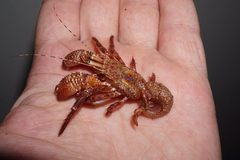
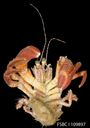
Petrochirus diogenes is a large marine hermit crab native to the Caribbean Sea and western Atlantic Ocean. It is notable for its ability to occupy fully grown shells of the conch (Lobatus gigas), which it acquires by preying upon living conchs. Originally described by Linnaeus in 1758 as Cancer diogenes, the epithet references the Greek philosopher Diogenes of Sinope, who famously lived in a large ceramic jar.

Pronunciation
How to pronounce Petrochirus diogenes: /pɛˈtrɔkɪrəs daɪˈɒdʒɪniːz/
These audio files are automatically generated. While they are not always 100% accurate, they are a good starting point.
Identification
Distinguished from other hermit crabs by its large size, sufficient to inhabit conch shells. The combination of massive body size and association with large gastropod shells, particularly Lobatus gigas, separates it from smaller Caribbean hermit crab .
Images
Habitat
Marine; shallow coastal waters of the Caribbean Sea and western Atlantic Ocean. Frequently associated with seagrass beds and reef environments where conchs occur.
Distribution
Western Atlantic Ocean, including the Caribbean Sea. Documented from the Lesser Antilles and Saint Thomas.
Diet
Predatory; has been observed to attack and consume living conchs (Lobatus gigas), obtaining both nutrition and shelter from prey.
Host Associations
- Lobatus gigas - prey and shell source conch; P. diogenes kills conchs to acquire their shells for shelter
Behavior
Engages in active on large gastropods rather than scavenging for empty shells. This provides simultaneous nutritional and shelter resources.
Ecological Role
of large marine gastropods; creates available for smaller organisms by occupying and eventually vacating large shells.
Human Relevance
The ' specific epithet honors Diogenes of Sinope, the Greek philosopher who lived in a large jar, reflecting the crab's habit of dwelling in large shells.
Similar Taxa
- Other Caribbean hermit crabs (family Diogenidae)Smaller cannot occupy conch shells and rely on scavenged empty shells rather than active on living conchs.
More Details
Nomenclatural history
First described by Carl Linnaeus in 1758 as Cancer diogenes, later transferred to the Petrochirus.
Etymology
The specific epithet 'diogenes' honors Diogenes of Sinope, the Cynic philosopher who lived in a large ceramic jar (pithos), drawing a parallel to this crab's habit of inhabiting large shells.