Diogenidae
Ortmann, 1892
Left-handed Hermit Crabs
Genus Guides
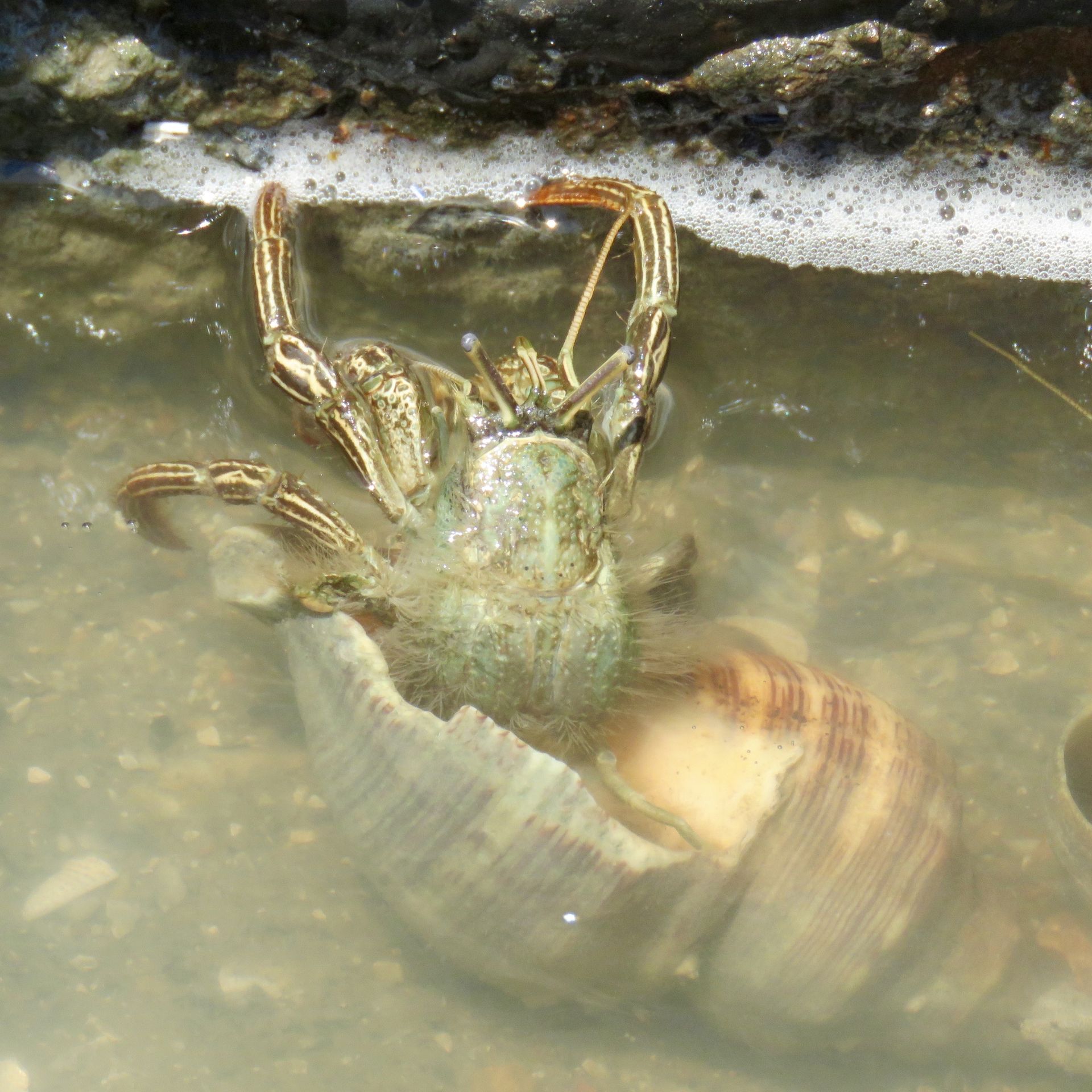
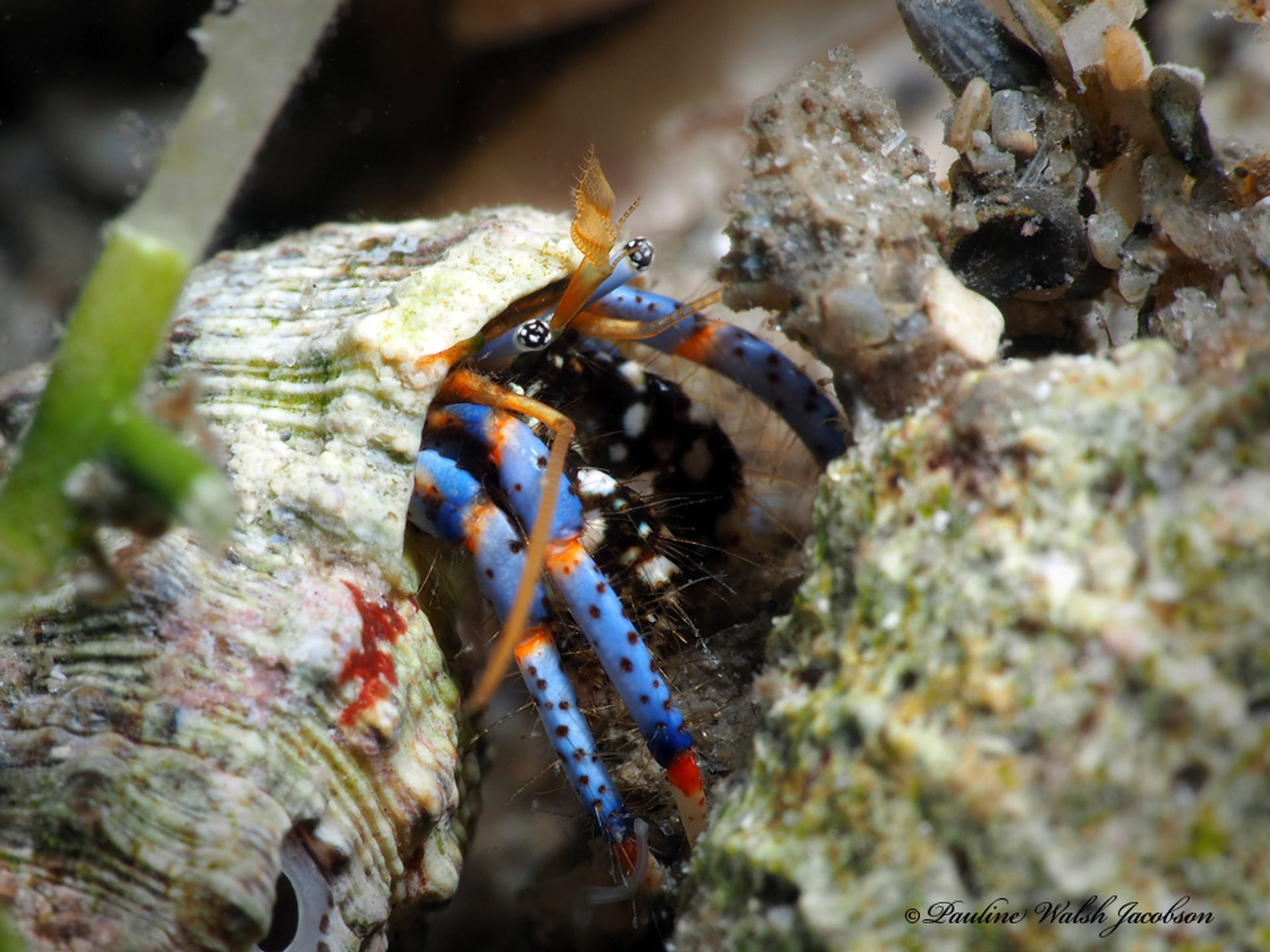
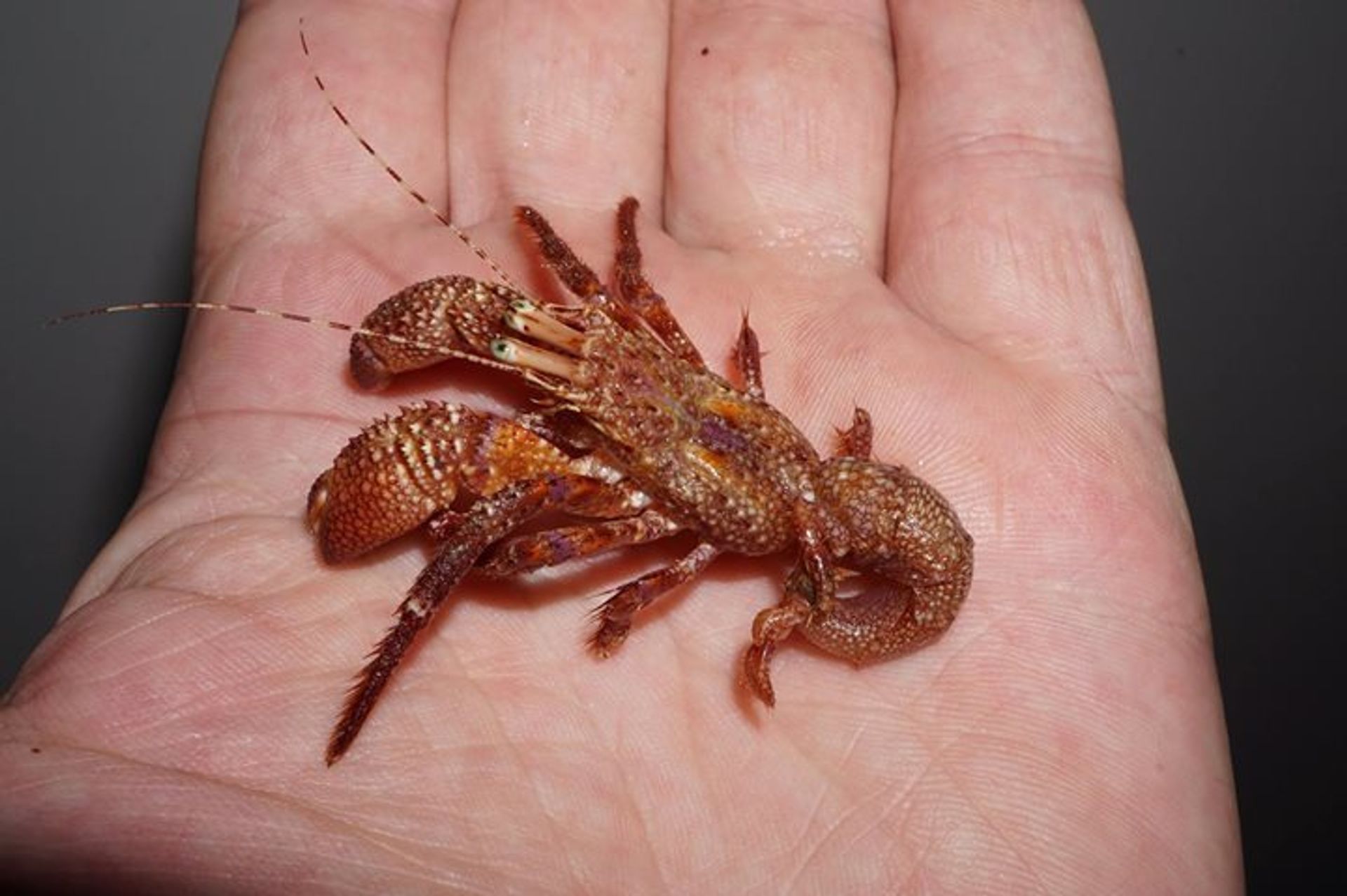
2Diogenidae is the second-largest of marine hermit crabs, comprising 429 extant and 47 extinct . Members are distinguished by an enlarged left chela (claw), earning them the 'left-handed hermit crabs'—the reverse of the typical pattern in other hermit crab families. The family includes both conventional shell-dwelling species and the unusual 'blanket-hermit crabs' of the Paguropsis, which live in with sea anemones rather than occupying gastropod shells.
Pronunciation
How to pronounce Diogenidae: //ˌdaɪˈɒdʒəˌnɪdiː//
These audio files are automatically generated. While they are not always 100% accurate, they are a good starting point.
Identification
The defining trait of Diogenidae is the enlarged left cheliped (claw), contrasting with the right-enlarged condition typical of Paguridae and most other hermit crab . This asymmetry is consistent across the family and serves as the primary diagnostic feature. vary considerably in size, coloration, and degree of calcification of the .
Images
Habitat
Primarily marine; occurs in intertidal, subtidal, and deep-sea environments from shallow coastal waters to depths exceeding 1,100 meters. Most occupy empty gastropod shells for protection. The specialized 'blanket-hermit crabs' ( Paguropsis and related ) inhabit soft-bottom sediments at 30–1,125 m depth and rely on sea anemone rather than shells.
Distribution
Global distribution in tropical and temperate marine waters. The blanket-hermit crab Paguropsis occurs in the subtropical and tropical Indo-West Pacific; the related genus Paguropsina is found in the western Pacific.
Host Associations
- sea anemones - Blanket-hermit crabs (Paguropsis, Paguropsina) use specialized chelate fourth legs to grasp and stretch anemone tissue over their soft bodies for protection. The specific anemone involved remain unidentified.
Behavior
Most exhibit shell-carrying and competitive shell exchange. Blanket-hermit crabs display unique 'blanketing' behavior: using modified chelipeds to pull anemone tissue forward over the body like a protective cover, which can be drawn completely over the or thrown half-back.
Ecological Role
As scavengers and , diogenid hermit crabs contribute to nutrient cycling in marine . Their occupation of gastropod shells influences shell availability and recycling in benthic . They serve as prey for fishes and other . The blanket-hermit crab represents a distinctive coevolutionary relationship with cnidarians.
Similar Taxa
- PaguridaeThe largest of marine hermit crabs; distinguished by enlarged right chela (vs. left in Diogenidae). Both families occupy gastropod shells, but only Diogenidae includes the shell-independent blanket-hermit crab lineage.
More Details
Taxonomic scope
The encompasses 429 extant across 20+ , including both conventional shell-dwelling crabs (Clibanarius, Calcinus, Dardanus) and the highly specialized blanket-hermit crab genera Paguropsis and Paguropsina.
Evolutionary significance
The blanket-hermit crab represents a major evolutionary departure from the shell-dependent lifestyle that characterizes most hermit crabs. This involves specialized fourth legs with claw morphologies resembling bear claws or ice-block tongs, depending on .
Sources and further reading
- BugGuide
- Wikipedia
- GBIF taxonomy match
- iNaturalist taxon
- NCBI Taxonomy
- Catalogue of Life
- Five new blanket-hermit crab species described 130 years later from the Pacific | Blog
- Shell exchange behavior in the Hawaiian hermit crab Calcinus hazletti (Decapoda, Diogenidae)
- POPULATION ECOLOGY OF THE HERMIT CRAB CLIBANARIUS VITTATUS (DECAPODA: DIOGENIDAE) AT SEBASTIAN INLET, FLORIDA