Petrochirus
Stimpson, 1858
Species Guides
1- Petrochirus diogenes(Giant Hermit Crab)
Petrochirus is a of marine hermit crabs in the Diogenidae, comprising seven described . The genus was established by William Stimpson in 1858. Species in this genus exhibit in cheliped size, with males bearing larger claws than females. They inhabit subtropical to tropical marine coastal waters, typically at depths of 6–10 meters. The genus has a fossil record extending to the early Pleistocene in the Mediterranean region.
Pronunciation
How to pronounce Petrochirus: /pɛˈtroʊkɪrəs/
These audio files are automatically generated. While they are not always 100% accurate, they are a good starting point.
Identification
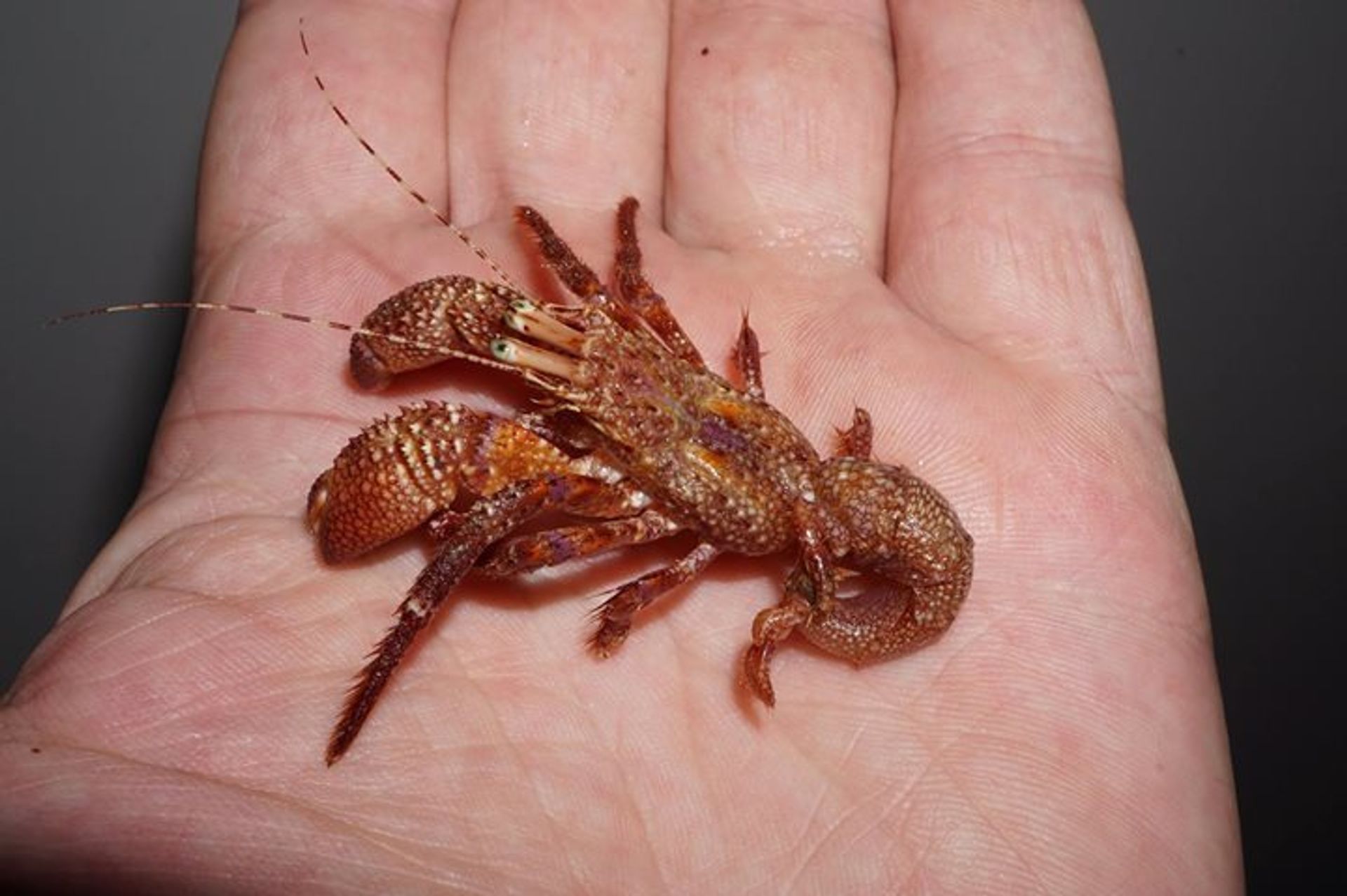
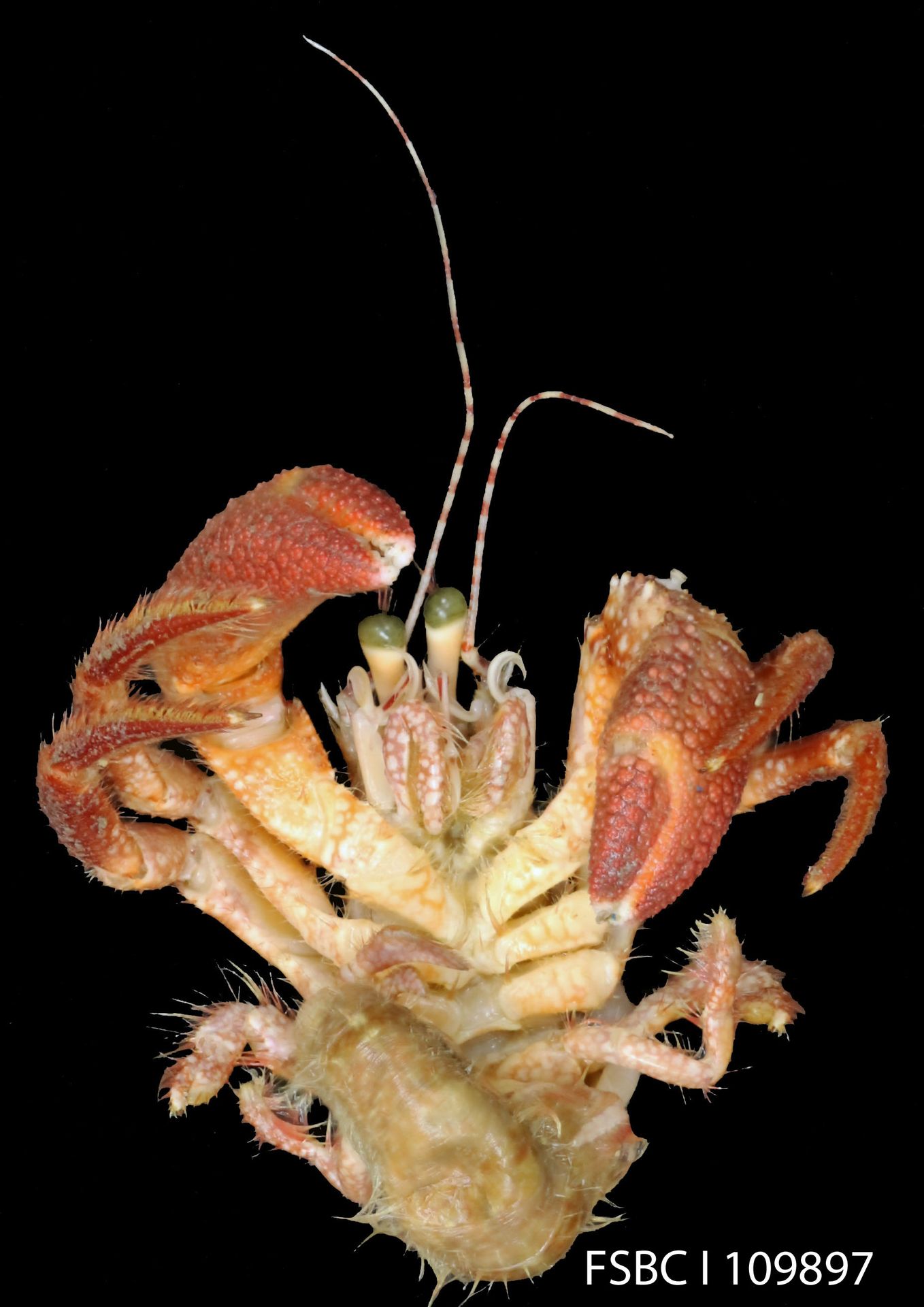
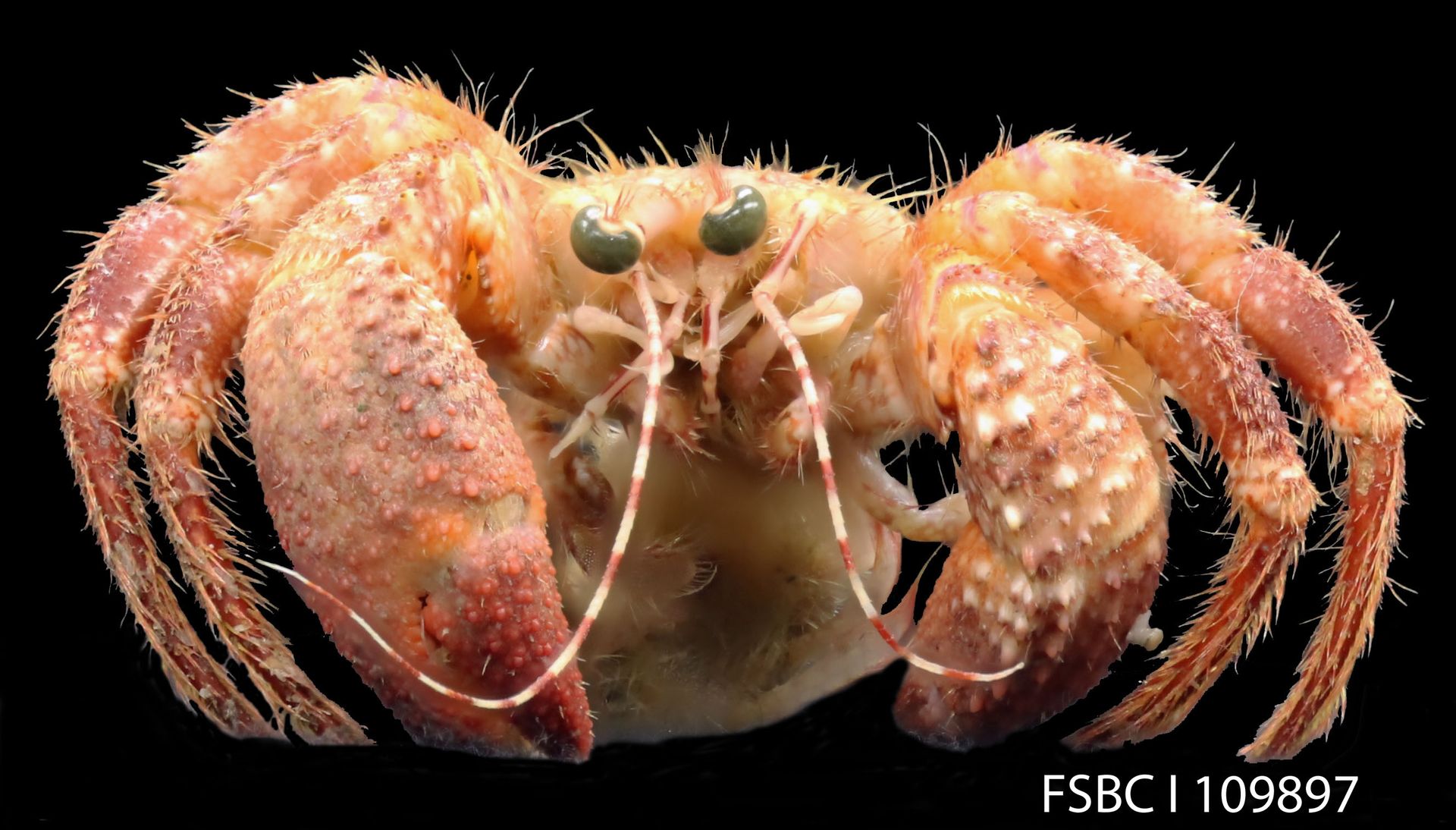
Heterochely (right cheliped larger than left) present in both sexes; males have significantly larger chelipeds than females. Cephalothoracic shield width follows isometric growth. Shell use patterns show negative allometry—larger crabs occupy proportionally lighter shells relative to body weight.
Images
Habitat
Marine subtropical coastal waters, typically at depths of 6.0–10.0 m. Collected by commercial fishing with double-rig drag nets, indicating benthic .
Distribution
Western Atlantic: documented from Ubatuba region, São Paulo State, Brazil (23°20'-23°35'S, 44°50'-45°14'W) and Armação of Itapocoroy, Penha, Santa Catarina, southern Brazil. Fossil record: early Pleistocene of Podere dell'Infrascato, Volterra, Tuscany, central Italy (upper bathyal zone).
Seasonality
Ovigerous females occur January–April and September–December.
Life Cycle
Females smaller than 10.0 mm cephalothoracic shield length considered ; smallest ovigerous female recorded at 10.0 mm shield length. Mean cephalothoracic length in 30.61±12.52 mm.
Behavior
Feeding stimulated by chemical cues; exhibits chemotactic responses to food-related chemicals. Heterochely may be adaptive in agonistic interactions and precopulatory behavior.
Human Relevance
Subject of commercial fishing operations using double-rig nets in Brazil.
Sources and further reading
- BugGuide
- Wikipedia
- GBIF taxonomy match
- iNaturalist taxon
- NCBI Taxonomy
- Catalogue of Life
- Chemical and chemotactic stimulation of feeding behavior in the hermit crab Petrochirus diogenes
- Population biology of the hermit crab Petrochirus diogenes (Linnaeus) (Crustacea, Decapoda) in Southern Brazil
- Relative growth of Petrochirus diogenes (Linnaeus, 1758) (Crustacea, Anomura, Diogenidae) in the Ubatuba region, São Paulo, Brazil
- Petrochirus sp. (Anomura, Paguroidea, Diogenidae) from the early Pleistocene of the Podere dell’Infrascato, Volterra (Pisa, Tuscany, central Italy)