
Simocephalus
Schoedler, 1858
water flea
Species Guides
2Simocephalus is a of freshwater cladoceran crustaceans commonly known as water fleas. Members exhibit the characteristic cladoceran with alternating parthenogenetic and phases. The genus has been studied extensively for reproductive , with environmental factors such as temperature, food concentration, crowding, and illumination influencing traits.
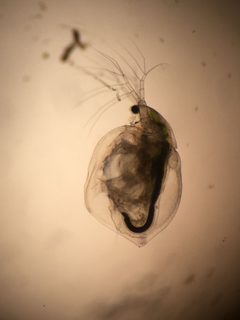
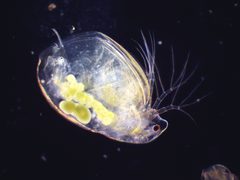
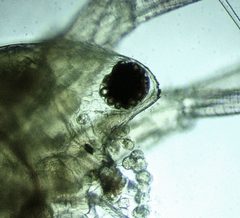
Pronunciation
How to pronounce Simocephalus: /ˌsaɪmoʊˈsɛfələs/
These audio files are automatically generated. While they are not always 100% accurate, they are a good starting point.
Images
Habitat
Freshwater environments; primarily ponds and standing water bodies
Distribution
Recorded from Denmark, Norway, and Sweden; broader distribution includes lentic freshwater across multiple regions
Life Cycle
Alternating parthenogenetic () and gamogenetic (sexual) . dominates under favorable conditions, producing that develop directly into females. is triggered by environmental deterioration (crowding, temperature changes, food limitation), producing haploid eggs requiring ; these develop into resting eggs enclosed in an ephippium for or surviving unfavorable conditions. Males are produced parthenogenetically when conditions induce sexuality. An intermoult cycle related to egg laying causes variation in pigmentation.
Similar Taxa
- DaphniaBoth are cladoceran water fleas in Daphniidae with similar body plans and reproductive strategies; Simocephalus distinguished by and antennal features
- CeriodaphniaSmaller cladoceran in same ; Simocephalus typically larger with different shape and chamber characteristics
Sources and further reading
- BugGuide
- GBIF taxonomy match
- iNaturalist taxon
- NCBI Taxonomy
- Catalogue of Life
- Simocephalus Reproduction and Illumination
- Studies in the life cycle of Simocephalus vetulus ...
- STUDIES IN THE LIFE CYCLE OF SIMOCEPHALUS VETULUS
- A Study of the Distribution of Daphnia Obtusa and Simocephalus vetulus in Response to Varying Environmental Conditions Using Field and Microcosm Approaches
- Divergent life history traits in two closely related species of Simocephalus (Cladocera: Daphnidae) inhabiting lentic environments in Venezuela
- The biology of simocephalus acutirostratus king (Cladocera: Daphnidae)-hatchability of the parthenogenetic egg cultured in artificial media
- Effect of crowding on growth and reproduction of Simocephalus vetulus O.F. Müller
- Variation in carotenoid pigmentation of Simocephalus vetulus(Crustacea: Cladocera)
- EFFECT OF TEMPERATURE AND FOOD CONCENTRATION ON THE GROWTH AND REPRODUCTION OF SIMOCEPHALUS VETULUS