
Kovarikia angelena
(Gertsch & Soleglad, 1972)
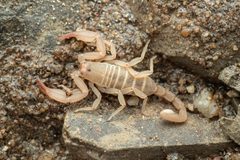
Kovarikia angelena is a of in the Vaejovidae, first described in 1972. It is one of three species in the Kovarikia, a group of small to medium-sized scorpions to California. The species is known from scattered localities in southern California and has been documented through iNaturalist observations.
Pronunciation
How to pronounce Kovarikia angelena: //koʊˈvɛrɪkiə ˌændʒəˈliːnə//
These audio files are automatically generated. While they are not always 100% accurate, they are a good starting point.
Identification
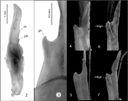
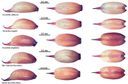
Kovarikia angelena can be distinguished from K. williamsi and K. bogerti by subtle morphological differences in chela structure and metasomal segment proportions. The three of Kovarikia are geographically separated, with K. angelena occurring in southern California, K. williamsi in central coastal California, and K. bogerti in Baja California. Detailed examination of the chelal fingers and granulation is required for definitive identification.
Images
Habitat
Found in rocky and crevices in southern California, typically in chaparral and coastal sage scrub environments.
Distribution
Southern California, United States. Records indicate presence in Los Angeles County and surrounding areas.
Behavior
, sheltering in rock crevices during daylight hours.
Ecological Role
of small in rocky microhabitats.
Human Relevance
Not medically significant; stings are comparable to stings in severity. Occasionally encountered by hikers and rock climbers in southern California.
Similar Taxa
- Kovarikia williamsiOverlaps in general but geographically separated to central California coast; differs in chela proportions and features.
- Kovarikia bogertiSimilar size and build but restricted to Baja California; distinguished by metasomal and chelal characteristics.
- Paruroctonus speciesSympatric vaejovid scorpions in southern California that share rocky preferences; differ in structure and .
More Details
Taxonomic history
Originally described as Vaejovis angelena by Gertsch and Soleglad in 1972, later transferred to the new Kovarikia by Soleglad and Fet in 2005 to accommodate this group with distinctive morphological features.
Conservation status
Not formally assessed; limited range in urbanized southern California may pose localized threats from loss.