
Graemeloweus
Soleglad, Fet, Graham & Ayrey, 2016
Species Guides
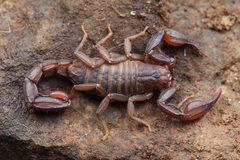
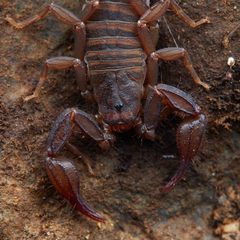
3Graemeloweus is a of scorpions in the Vaejovidae, described in 2016. The genus was established based on morphological and molecular evidence to accommodate previously placed in other genera. Members are found in the southwestern United States and northern Mexico. The genus honors arachnologist Graeme Lowe for his contributions to .

Pronunciation
How to pronounce Graemeloweus: //ˌɡreɪmɛˈloʊjus//
These audio files are automatically generated. While they are not always 100% accurate, they are a good starting point.
Identification
Diagnostic features include characteristics of the chela (pincer) and metasomal (tail) segment that distinguish it from related vaejovid such as Paruroctonus and Smeringurus. Specific diagnostic traits involve the arrangement of (sensory hairs) on the pedipalps and the structure of the hemispermatophore. Detailed examination requires microscopy or dissection.
Images
Habitat
Arid and semi-arid regions of the southwestern United States and adjacent Mexico, including desert scrub, grassland, and rocky slopes. occupy microhabitats under rocks, in soil cracks, and within vegetation litter.
Distribution
Southwestern United States (Arizona, New Mexico, southern California, southern Nevada, southern Utah, western Texas) and northern Mexico (Sonora, Chihuahua, Baja California).
Similar Taxa
- ParuroctonusOverlaps in distribution and ; distinguished by chela proportions and trichobothrial patterns.
- SmeringurusPreviously congeneric with some Graemeloweus ; separated based on hemispermatophore structure and molecular data.
- VaejovisType of Vaejovidae; Graemeloweus generally have more robust chelae and different metasomal granulation.
More Details
Etymology
Named in honor of Graeme Lowe, British arachnologist and leading authority on and .
Taxonomic History
The was erected in 2016 following phylogenetic analysis that revealed Smeringurus was polyphyletic. Several were transferred to Graemeloweus to reflect their evolutionary relationships.