
Diplocentridae
Karsch, 1880
Spinysting Scorpions
Genus Guides
1- Diplocentrus(Toothed Scorpions)
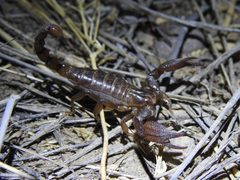
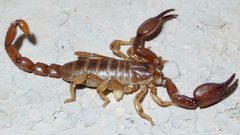
A of scorpions comprising approximately 120 , primarily distributed in the New World with the notable exception of the Nebo, which occurs in the Middle East. The family is divided into two : Diplocentrinae and Nebinae. Taxonomic status remains debated; a 2003 study proposed treating Diplocentridae as a subfamily of Scorpionidae rather than a distinct family.
Pronunciation
How to pronounce Diplocentridae: /ˌdɪploʊˈsɛntrɪdiː/
These audio files are automatically generated. While they are not always 100% accurate, they are a good starting point.
Identification
Distinguished from other by a combination of morphological characters including the structure of the chelae and metasomal segments. The Nebinae ( Nebo) is geographically isolated in the Middle East, while Diplocentrinae is New World. -level identification within Diplocentrus and other genera often requires examination of male hemispermatophores and subtle differences in and tergite ornamentation.
Images
Habitat
Most occupy terrestrial in arid and semi-arid regions, including rocky areas, forest litter, and soil burrows. Specific microhabitat preferences vary by and species.
Distribution
New World, from the southwestern United States through Mexico and Central America to northern South America, including Caribbean islands (Lesser Antilles). Nebo is distributed in the Middle East.
Behavior
Birth has been described for at least one (Diplocentrus spitzeri), indicating viviparity with females giving birth to live young.
Human Relevance
Some have restricted distributions and may be of conservation concern; several island species are known. The has been subject to taxonomic revision due to its debated phylogenetic position.
Similar Taxa
- ScorpionidaeDiplocentridae has been proposed as a within Scorpionidae based on 2003 phylogenetic analysis; the two share morphological similarities in structure and metasomal segmentation that can complicate identification at the level.
- ButhidaeBoth occur in similar New World and share general body plan; Buthidae typically exhibits more slender and a different trichobothrial pattern on the chelae.
Sources and further reading
- BugGuide
- Wikipedia
- GBIF taxonomy match
- iNaturalist taxon
- NCBI Taxonomy
- Catalogue of Life
- Diplocentrus bicolor sp. n. (Scorpiones: Diplocentridae) from Jalisco, Mexico
- The Life History of Diplocentrus bigbendensis Stahnke (Scorpiones, Diplocentridae)
- Birth Behavior and Life History of Diplocentrus spitzeri Stahnke (Scorpiones: Diplocentridae)
- The Scorpions of Petite Terre, Guadeloupe, Lesser Antilles, with description of a new species of Oiclus Simon, 1880 (Scorpiones, Buthidae, Diplocentridae)
- A new scorpion species of genus Diplocentrus Peters, 1861 (Scorpiones: Diplocentridae) endemic to Islas de la Bahia, Honduras