
Stenochrus portoricensis
Chamberlin, 1922
short-tailed whipscorpion, microwhipscorpion
Stenochrus portoricensis is a widely distributed short-tailed whipscorpion (Schizomida: Hubbardiidae) native to the Neotropics and Nearctic regions. The exhibits exceptional capability facilitated by parthenogenetic , enabling establishment in diverse across multiple continents. Molecular studies indicate the species is , with a Mesoamerican origin and multiple independent introductions to Europe and the Caribbean from the Yucatán Peninsula. Sexual persist in natural habitats across Cuba, Dominican Republic, Guatemala, Mexico, Nicaragua, and Puerto Rico, while parthenogenetic lineages dominate introduced ranges.
Pronunciation
How to pronounce Stenochrus portoricensis: /ˈstɛ.nə.krʊs ˌpɔr.toʊ.rɪˈsɛn.sɪs/
These audio files are automatically generated. While they are not always 100% accurate, they are a good starting point.
Identification
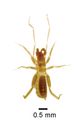
Distinguished from primarily by female spermathecae , the diagnostic character used in its original description. are small, pale arachnids with a characteristic short, flagelliform (whip-like sensory appendage) that is relatively short compared to other arachnid orders. The prosoma and opisthosoma are clearly separated, with the opisthosoma bearing a short terminal . Specific identification requires examination of female reproductive structures, as the shows minimal external morphological variation across its broad range.
Images
Habitat
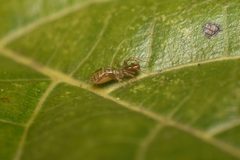
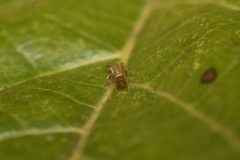
Found in forest leaf litter, caves, under stones, and on tree bark. In anthropized areas, occurs in cities and urban environments. In Europe, established primarily in greenhouses. In Brazil, documented from abandoned arboreal nests in cocoa plantations and the Atlantic Forest. In Rica, collected from bromeliads on trees at 1–3 meters height. Also recorded from hypogean (subterranean) .
Distribution
Native range: Antilles (Cuba, Dominica, Dominican Republic, Jamaica, Puerto Rico, Saint Barthélemy, Virgin Islands), Central America (Belize, Rica, Guatemala, Honduras, Nicaragua, Panama), and North America (Bermuda, Mexico, USA: Florida). Introduced and established: South America (Brazil, Colombia, Ecuador including Galápagos Islands and Guayaquil, Venezuela), and Europe (Czech Republic, Germany, Great Britain, Poland, Slovakia, Switzerland, Spain including Canary Islands and Sevilla). New records include Costa Rica (Guanacaste), Venezuela (Mérida), and multiple Brazilian states (Bahia, Minas Gerais, Pará, Pernambuco, Rio de Janeiro, São Paulo).
Host Associations
- abandoned arboreal termite nests - microhabitatSeveral female specimens found associated with abandoned arboreal nests in a cocoa plantation in Bahia, Brazil
- Ethelum americanum - microhabitat co-occurrenceShares microhabitat with this under stones in anthropized areas
Human Relevance
Considered a potentially due to its broad distribution, ecological , and parthenogenetic enabling rapid . Established in European greenhouses and urban areas suggest human-mediated . The ' ability to thrive in anthropized raises concerns about potential ecological impacts, though specific effects remain unstudied.
Similar Taxa
- Stenochrus species complexS. portoricensis was historically confused with ; two previously synonymized under S. portoricensis have been revalidated based on molecular and morphological data. The remaining S. portoricensis sensu stricto comprises two subclades with minimal genetic divergence.
- Rowlandius speciesBoth are hubbardiid schizomids occurring in the Neotropics, but Rowlandius are distinguished by different and genital morphologies, and have more restricted distributions.
Sources and further reading
- BugGuide
- Wikipedia
- GBIF taxonomy match
- iNaturalist taxon
- NCBI Taxonomy
- Catalogue of Life
- Gotta Love Those Spiders | Bug Squad
- Encyrtid Holdings | Entomology Research Museum
- The alien species Stenochrus portoricensis (Schizomida: Hubbardiidae): decreasing the Wallacean shortfall in the New World
- Stenochrus portoricensis neu für Nordrhein-Westfalen, mit Anmerkungen zur Verbreitung und Habitaten weiterer eingeschleppter Zwerggeißelskorpionarten in Europa (Arachnida: Schizomida)
- The arachnid order Schizomida in the Brazilian Atlantic Forest: a new species of Rowlandius and new records of Stenochrus portoricensis (Schizomida: Hubbardiidae)
- World Travelers: Parthenogenesis and Ecological Tolerance Enable Multiple Colonization Events by the Widespread Short-Tailed Whipscorpion, Stenochrus portoricensis (Schizomida: Hubbardiidae)