
Paranonychus
Briggs, 1971
Species Guides
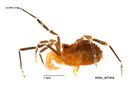
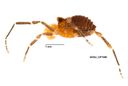
1- Paranonychus brunneus(armoured harvestman)
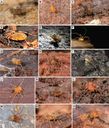
Paranonychus is a of harvestmen (order Opiliones) established by Briggs in 1971. The genus contains three described with a disjunct distribution: two species occur in the Pacific Northwest of North America, while one species is found in northern Japan. The genus is the namesake of the Paranonychidae, which belongs to the superfamily Travunioidea. The Japanese species, P. fuscus, was originally described in a separate genus as Mutsunonychus fuscus before being transferred to Paranonychus.
Pronunciation
How to pronounce Paranonychus: //ˌpærəˈnɒnɪkəs//
These audio files are automatically generated. While they are not always 100% accurate, they are a good starting point.
Identification
Members of Paranonychus can be distinguished from other travunioid harvestmen by features of the male genitalia and tarsal claw structure, though specific diagnostic characters require examination. The is distinguished from the related genus Sclerobunus by differences in and tarsal . The two North American differ in coloration: P. brunneus is brown, while P. concolor is uniformly colored.
Images
Habitat
Paranonychus inhabit moist forest environments. P. brunneus occurs in coastal and near-coastal forests from Oregon to Alaska, including mature coniferous and mixed woodlands. P. concolor is known from a single location in the Cascade Range, suggesting association with montane forest . P. fuscus is widespread in northern Honshu, Japan, in forested areas of Aomori Prefecture and surrounding regions.
Distribution
Disjunct distribution across the North Pacific: western North America (Oregon, Washington, Alaska, and British Columbia) and northern Japan (Honshu, primarily Aomori Prefecture). P. brunneus: USA (Oregon, Washington, Alaska) and Canada (British Columbia). P. concolor: USA (Oregon, single Cascade Range locality). P. fuscus: Japan (widespread in northern Honshu).
Similar Taxa
- SclerobunusClosely related in the same Paranonychidae; distinguished by and tarsal claw
- ZumaAnother in Paranonychidae; geographic overlap with P. brunneus in the Pacific Northwest requires careful differentiation
- MutsunonychusFormer name for P. fuscus; now synonymized, but older literature may use this name for the Japanese
More Details
Taxonomic history
The was established by Briggs in 1971. The Japanese was originally described as Mutsunonychus fuscus Suzuki 1976, but subsequent studies transferred it to Paranonychus, making Mutsunonychus a junior synonym.
Conservation note
P. concolor is known from only a single locality in the Cascade Range, making it potentially vulnerable due to restricted range, though formal conservation assessments are lacking.