
Trachyrhinus
Weed, 1892
Species Guides
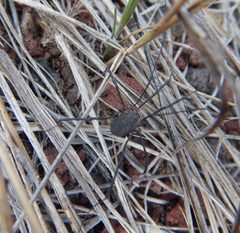
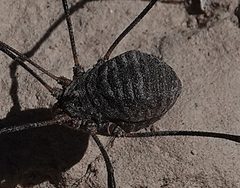
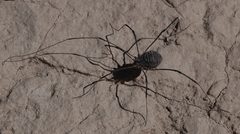
2Trachyrhinus is a of harvestmen (order Opiliones) in the Sclerosomatidae, found in North America. The genus contains seven described , including Trachyrhinus favosus, which has been documented in shortgrass prairie . Members of this genus are characterized by relatively short legs compared to many other harvestmen, and some species exhibit distinctive defensive including vigorous bouncing.
Pronunciation
How to pronounce Trachyrhinus: /ˌtrækɪˈraɪnəs/
These audio files are automatically generated. While they are not always 100% accurate, they are a good starting point.
Identification
Distinguished from other harvestmen by relatively short legs and compact body form. T. favosus specifically identified by nearly black body with yellow-brown femoral bases and orange intersegmental articular at leg bases. Sclerosomatidae assignment supported by overall gestalt and confirmed by examination. Differentiation from other Trachyrhinus requires examination of palpal and other morphological details described in Cokendolpher (1981).
Images
Habitat
Shortgrass prairie documented for T. favosus. Specific habitat preferences for other not well documented in available sources.
Distribution
North America. T. favosus ranges in a narrow band from North Dakota south to north-central Texas. Other distributions not specified in available sources.
Seasonality
T. favosus active only during fall. Seasonality of other not documented.
Behavior
Defensive bouncing observed: when disturbed, individuals bounce up and down vigorously while away, apparently functioning to blur body form and confuse . This behavior has been observed to continue for some time while the animal moves away from disturbance.
Similar Taxa
- Other Sclerosomatidae generaTrachyrhinus distinguished by shorter legs and more compact body; many sclerosomatids have notably longer, more slender legs.
- LeiobunumCommon long-legged harvestman ; Trachyrhinus has proportionally much shorter legs and more robust body form.
More Details
Taxonomic authority discrepancy
Authority cited as Weed, 1892 in NCBI ; Sharp, 1896 in Catalogue of Life. NCBI authority accepted here as more commonly referenced in arachnological literature.
Defensive chemistry
Harvestmen in this are known to employ chemical defenses through repugnatorial glands producing phenols, quinones, ketones, and/or alcohols. The orange coloration at leg bases in some Trachyrhinus may represent aposematic coloration warning of distastefulness.