
Hebestatis theveneti
(Simon, 1891)
Thevenet's Trapdoor Spider
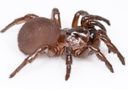
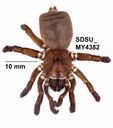
Hebestatis theveneti is a of cork-lid trapdoor spider in the Halonoproctidae. It is native to the United States and constructs burrows sealed with camouflaged, hinged trapdoors. The species is one of several trapdoor spiders maintained in research collections for study of arachnid and .
Pronunciation
How to pronounce Hebestatis theveneti: //hɛˈbɛs.tə.tɪs θɛˈvɛ.nəˌti//
These audio files are automatically generated. While they are not always 100% accurate, they are a good starting point.
Identification
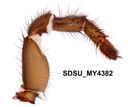
As a cork-lid trapdoor spider, Hebestatis theveneti possesses a hardened, disk-like (trapdoor) used to seal its burrow entrance. This distinguishes it from wafer-lid trapdoor spiders ( Euctenizidae), which use thinner, flexible lids. The Hebestatis is characterized by specific morphological features of the burrow architecture and genitalia, though precise diagnostic characters for H. theveneti require examination.
Images
Habitat
Constructs burrows in soil, typically in undisturbed ground. The burrow is lined with silk and sealed with a camouflaged cork-like trapdoor constructed from soil, silk, and local debris.
Distribution
United States. Specific state-level distribution records are limited in available sources.
Behavior
Exhibits ambush from the burrow entrance. The spider remains beneath its trapdoor, detecting vibrations from passing prey through sensory structures, then rapidly emerges to capture prey. This sit-and-wait strategy minimizes exposure to and desiccation.
Ecological Role
of ground-dwelling . Its burrowing activity contributes to soil aeration and structure.
Human Relevance
Occasionally maintained in research and educational collections. Live specimens have been displayed at public outreach events, including the UC Davis Biodiversity Museum Day, to demonstrate trapdoor spider and sensory adaptations. Not considered medically significant.
Similar Taxa
- Ummidia spp.Also cork-lid trapdoor spiders (Halonoproctidae) with similar burrow architecture; distinguished by genitalic and burrow entrance characteristics.
- Bothriocyrtum californicumCalifornia cork-lid trapdoor spider with overlapping range; requires examination of morphological details for separation.
- Euctenizidae (wafer-lid trapdoor spiders)Different with similar ; distinguished by thin, flexible trapdoor lids rather than the thick, hardened cork-like lids of Halonoproctidae.
More Details
Taxonomic Note
placement has shifted over time. NCBI lists this under Ctenizidae, but current consensus places Halonoproctidae as a distinct family. The Hebestatis was revised in recent taxonomic treatments of North American trapdoor spiders.