
Cyclocosmia truncata
(Hentz, 1841)
Ravine Trapdoor Spider
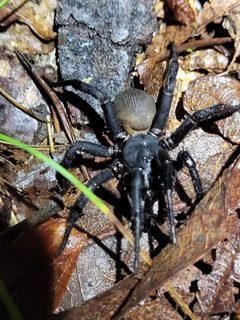
Cyclocosmia truncata is a cork-lid trapdoor spider native to the United States. It constructs burrows in soil and employs a distinctive defensive called , using its rigid, disc-shaped to plug the burrow entrance when threatened. The belongs to the mygalomorph spider group, which includes tarantulas and other trapdoor spiders. It is not considered dangerous to humans despite possessing venom typical of spiders.
Pronunciation
How to pronounce Cyclocosmia truncata: /ˌsaɪkloʊˈkoʊzmiə ˈtrʌŋkətə/
These audio files are automatically generated. While they are not always 100% accurate, they are a good starting point.
Identification
The truncated, disc-shaped is diagnostic for the Cyclocosmia and distinguishes C. truncata from other trapdoor spiders. The abdominal is flattened and hardened, forming a perfect seal against the burrow entrance. This can be distinguished from by geographic range and subtle morphological differences in abdominal structure, though detailed comparative keys are not readily available in cited sources.
Images
Habitat
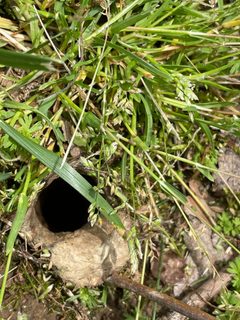
Ravines and moist, forested areas with suitable soil for burrow construction. The requires substrates that allow excavation of permanent burrows with structurally stable entrances.
Distribution
United States. Specific state-level distribution not detailed in available sources, but records indicate presence in eastern North American .
Diet
, feeding on ground-dwelling including grasshoppers and crickets that pass near the burrow entrance.
Behavior
Constructs and maintains a silk-lined burrow in soil. When threatened, retreats into the burrow and employs : pressing the rigid, disc-shaped against the burrow entrance to form a physical barrier against . The abdominal disc fits precisely into the entrance, creating an effective seal. The spider remains in this defensive posture until the threat passes.
Ecological Role
of soil-dwelling and ground-active . Its burrowing activity may contribute to soil aeration and nutrient mixing in forest floor .
Human Relevance
Subject of viral misinformation in 2019 when images were falsely circulated depicting it as a deadly 'Oreo spider' found on beaches that could kill humans within five minutes. Arachnologists confirmed the is not found on beaches, does not cause rapid human death, and is not aggressive toward humans. Bites, if they occur, result only in minor pinching sensations without significant envenomation effects in humans.
Similar Taxa
- Other Cyclocosmia speciesShare the diagnostic truncated abdominal disc and , distinguished by subtle morphological and geographic differences
- Other Halonoproctidae trapdoor spidersSimilar burrowing and mygalomorph body plan, but lack the highly modified abdominal disc used for burrow sealing
Misconceptions
Widely circulated false claims in 2019 social media posts stated this is found on beaches, is highly poisonous to humans, and causes death within five minutes of a 'sting.' All claims are erroneous: the species is not a beach dweller, its venom is not toxic to humans, spiders bite rather than sting, and no human fatalities have been recorded.
More Details
Taxonomic History
Previously placed in Ctenizidae, now classified in Halonoproctidae based on phylogenetic revisions of mygalomorph spiders
Defensive Adaptation
The represents a remarkable case of morphological specialization, where the has evolved into a functional plug that serves as passive defense against such as
Sources and further reading
- BugGuide
- Wikipedia
- GBIF taxonomy match
- iNaturalist taxon
- NCBI Taxonomy
- Catalogue of Life
- Oh, Those Beach-Bum Spiders! | Bug Squad
- A Crafty Time at the Bohart Museum of Entomology | Bug Squad
- Catasticta truncata - Entomology Today
- Urban Wonder: Rare Butterfly Thrives in One of Ecuador's Largest Cities
- Acmaeodera carlota in northern Arizona | Beetles In The Bush
- Pablo Sebastian Padron, Ph.D. - Entomology Today