Uloborus glomosus
(Walckenaer, 1841)
Featherlegged Orbweaver
Uloborus glomosus is a small cribellate orb-weaving spider and the only member of its recorded in Canada. It belongs to the Uloboridae, a group distinguished by the absence of venom glands. The captures prey using hackled, non-sticky silk produced by a specialized spinning organ called the cribellum. Prey is subdued through extensive wrapping and constriction rather than venomous bite.
Pronunciation
How to pronounce Uloborus glomosus: /ˌjuːloʊˈboʊrəs ɡloʊˈmoʊsəs/
These audio files are automatically generated. While they are not always 100% accurate, they are a good starting point.
Identification
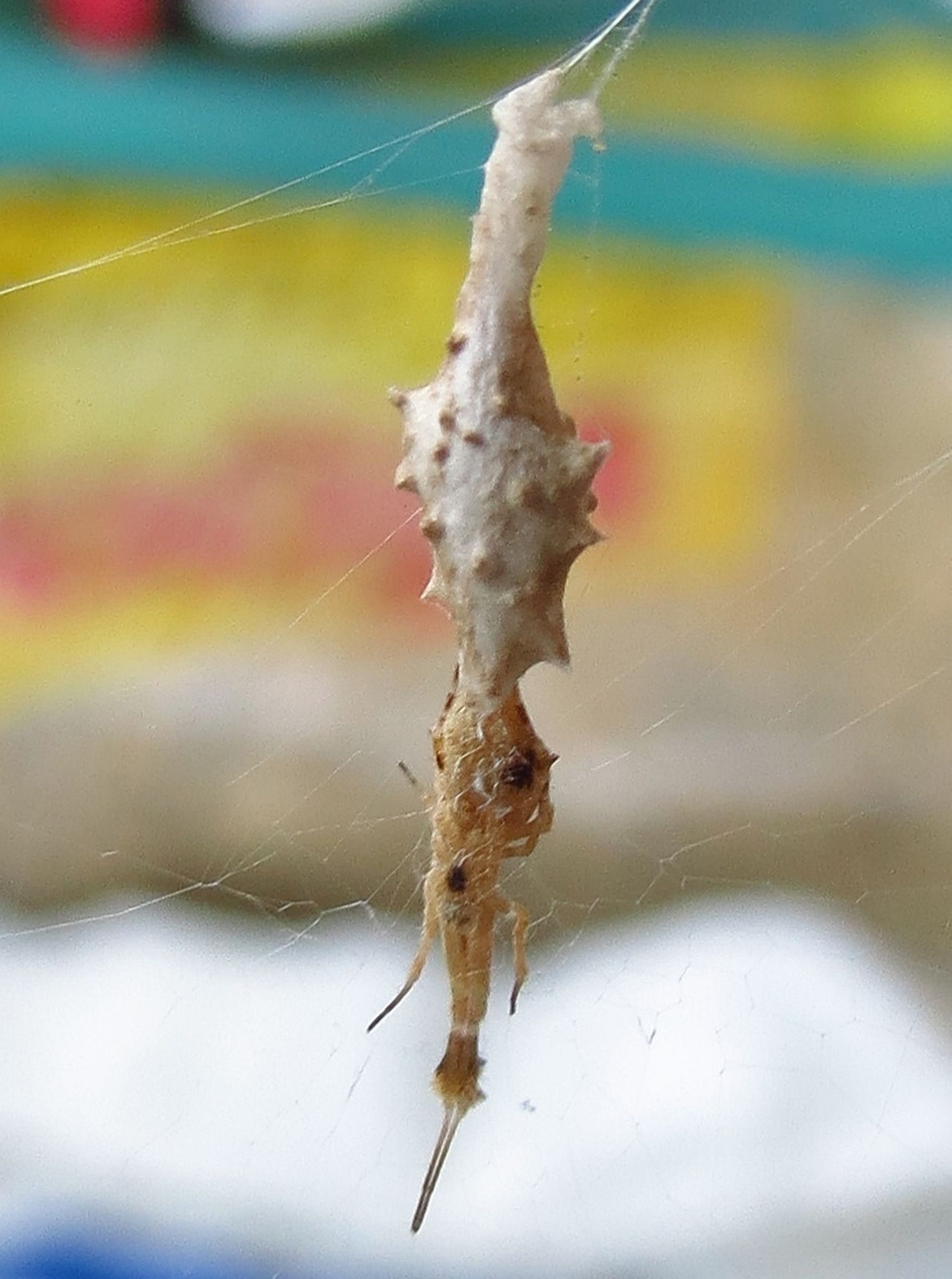
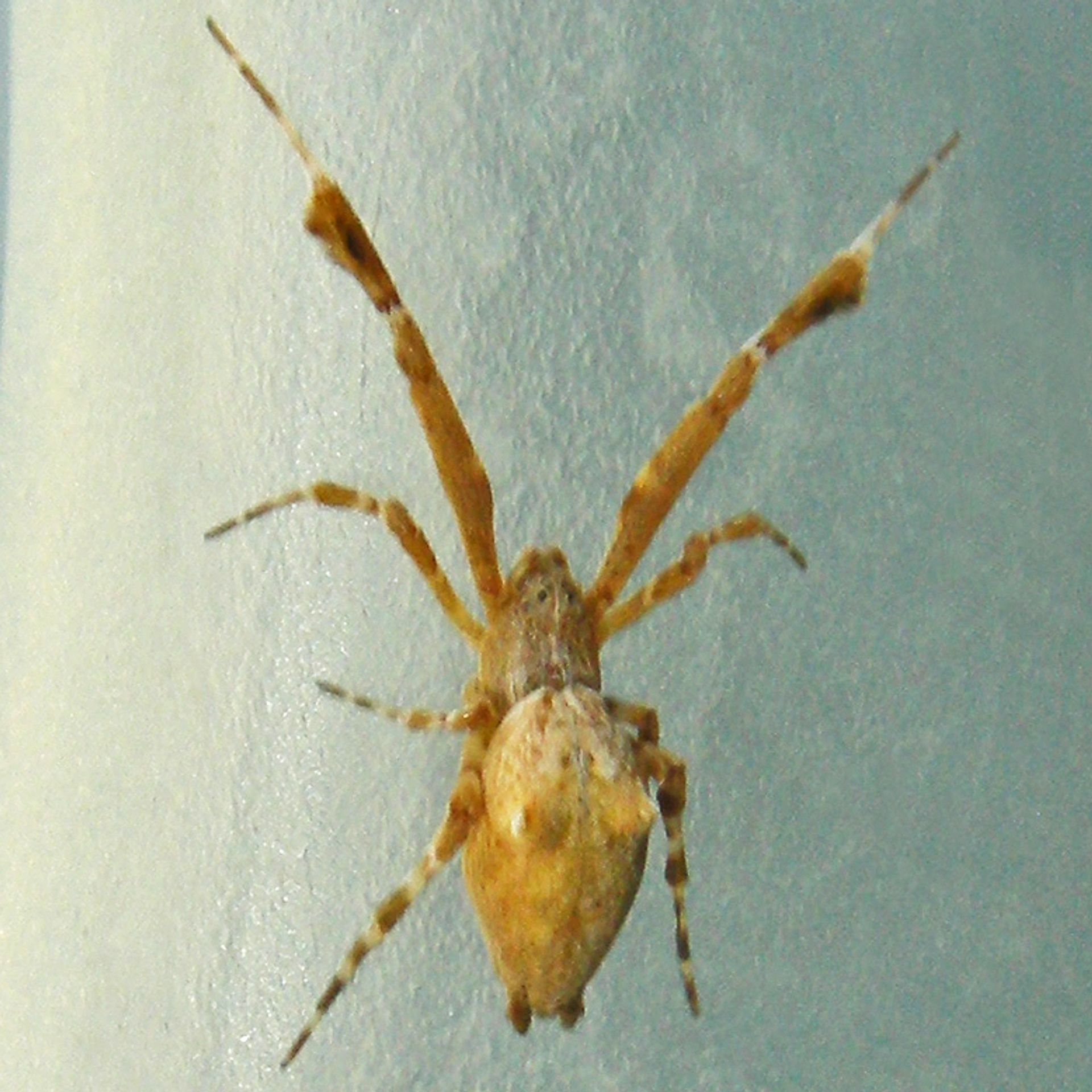
Distinguished from other small orb-weavers by the presence of cribellate (hackled, non-sticky) silk rather than glue-studded silk. The feather-like tuft on the front legs separates it from ecribellate orb-weavers such as Argiope and Cyclosa. The web often contains a —a thickened, zig-zag band of silk that may appear as an auxiliary spiral or linear band through the web center. Recently hatched spiderlings lack the cribellum and calamistrum, producing webs with additional and retained auxiliary spiral at the hub; these features change after the second .
Images
Appearance
Small spider with body length of 3-6 millimeters; males slightly smaller than females. Possesses a conspicuous tuft of hairs (feather-like) on the front legs, giving rise to the . The cribellum, a plate-like silk-producing organ, is located on the underside of the to the . The calamistrum, a comb-like row of bristles on the outer surface of the of each hind leg, is used to fluff cribellate silk.
Habitat
Found in varied outdoor situations including gardens, yards, parks, and greenhouses. Webs have been documented at the mouths of culverts and in vegetation such as goldenrods, asters, and ornamental trees. The builds relatively small, horizontal orb webs, often at low to moderate heights.
Distribution
North America: United States and southern Canada. It is the only Uloborus recorded in Canada and one of few in North America. GBIF records also indicate presence in Mexico.
Diet
Feeds on small insects captured in the orb web. Prey items observed include small flies such as pomace flies. The spiders do not subdue prey with venom; instead, they wrap victims extensively in silk, compressing softer body parts and potentially causing asphyxiation through constriction as the silk dries and tightens.
Life Cycle
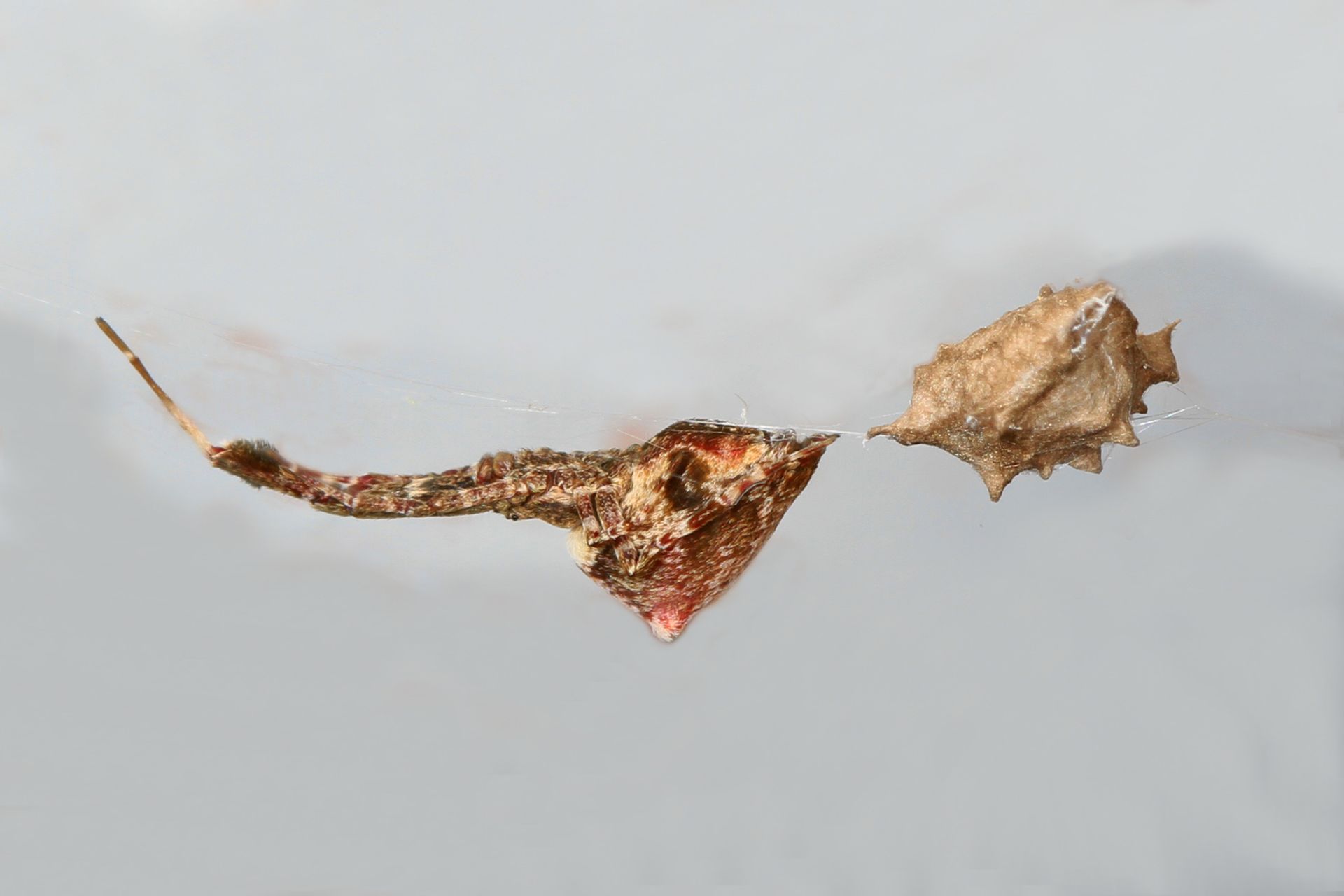
Females construct small, flattened, papery sacs positioned near the periphery of the web; multiple sacs may be arranged in a row. Spiderlings disperse and immediately build orb webs, but hatchlings lack the cribellum and calamistrum. Normal cribellate web construction begins after the second .
Behavior
Exhibits variable disturbance responses depending on time of day and presence of sacs. When egg sacs are present, females jerk the web to shake it. Without egg sacs, females typically walk to the opposite side of the web. Other responses include jumping from the web, moving to the edge, or remaining in the center. Prey capture involves prolonged wrapping lasting approximately 10 minutes, even for small, harmless prey. Web construction is slow and deliberate; each tangled span of the hackled spiral is drawn through the cribellum and fluffed with the calamistrum, requiring hours to complete.
Ecological Role
of small insects; contributes to regulation of small fly . The cribellate silk, while non-sticky, effectively immobilizes prey through physical entanglement. Spiderlings without functional cribellae may represent a vulnerable life stage with different ecological impact.
Human Relevance
Non-venomous and harmless to humans due to absence of venom glands. Occasionally encountered in gardens and greenhouses. May incidentally affect large butterflies in enclosed exhibits by incapacitating them with silk, though they cannot consume such large prey.
Similar Taxa
- Hyptiotes spp. (triangle spiders)Also in Uloboridae and share cribellate silk and absence of venom glands, but construct triangular sector webs rather than complete orbs, and lack the feather-like leg tufts.
- Argiope spp.Ecribellate orb-weavers that also build webs with , but use sticky glue-studded silk rather than hackled cribellate silk, and possess venom glands.
- Cyclosa spp.Ecribellate orb-weavers with ; distinguished by sticky silk, venom glands, and often by the presence of web decorations incorporating debris.
More Details
Cribellate Silk Production
The cribellum produces silk that is mechanically fluffed into tangled strands using the calamistrum. This represents an evolutionary alternative to the sticky glue of ecribellate spiders, with comparable prey capture effectiveness.
Male Rarity
Males appear to be rarely encountered; one arachnologist noted never having observed a male despite extensive field experience, suggesting possible cryptic , shorter lifespan, or underreporting.