
Dolichognatha
O. Pickard-Cambridge, 1869
Species Guides
1Dolichognatha is a of long-jawed orb-weaving spiders in the Tetragnathidae, distributed across tropical and subtropical regions worldwide. The genus was established by Octavius Pickard-Cambridge in 1869 and has undergone several taxonomic revisions, having been placed in Archaeidae, then Araneidae, before its current placement in Tetragnathidae. It contains 32 recognized found across Africa, Asia, the Americas, and the Pacific.
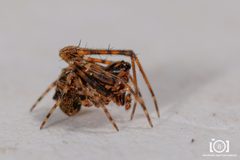
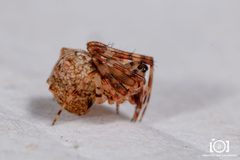
Pronunciation
How to pronounce Dolichognatha: //ˌdɒlɪkoʊˈnæθə//
These audio files are automatically generated. While they are not always 100% accurate, they are a good starting point.
Identification
Distinguished from other Tetragnathidae by a combination of genitalic and somatic characters; precise identification requires examination of in males and in females. The elongated separate it from most other orb-weaver , though other tetragnathid genera share this feature.
Images
Appearance
Spiders in this possess elongated (jaws), a defining trait of the Tetragnathidae . Body form is slender and elongated, consistent with other long-jawed orb-weavers. Specific morphological details vary among .
Habitat
Tropical and subtropical forests and associated vegetation. Specific microhabitat preferences vary by , with some occurring in low vegetation and others in forest .
Distribution
Pantropical distribution spanning East Africa, Sri Lanka, Southeast Asia, Indonesia, Philippines, Taiwan, Japan (Okinawa), Australia (Queensland), New Guinea, Pacific islands (Samoa), Caribbean, and the Americas from the United States through Central and South America to Brazil and Peru.
Ecological Role
Predatory spiders that construct orb webs to capture flying insects; contribute to in tropical .
Similar Taxa
- LeucaugeBoth are Tetragnathidae with elongated bodies and long legs, but Leucauge typically has shorter and different abdominal patterning.
- TetragnathaShares the long-jawed and slender build, but differs in genitalic structure and arrangement details.
More Details
Taxonomic history
Originally described in Archaeidae (1869), transferred to Araneidae (1967), then to Tetragnathidae (1981). This reflects changing understanding of spider and the recognition of Tetragnathidae as a distinct of long-jawed orb-weavers.
Species diversity
The shows highest in the Neotropics (Brazil, Guyana, Venezuela, Peru, Panama) and the Indo-Pacific region (Sri Lanka, Indonesia, Philippines, Australia), with notable African representation.