
Loxosceles apachea
Gertsch & Ennik, 1983
Apache Recluse
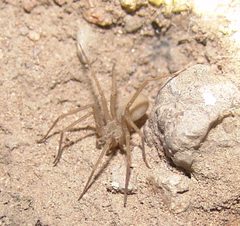
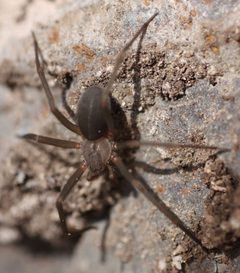
Loxosceles apachea, the Apache recluse, is a of recluse spider in the Sicariidae. It is found in the southwestern United States and Mexico. Like other recluse spiders, it possesses cytotoxic venom that can cause necrotic in rare cases, though bites are uncommon and typically occur only when the spider is trapped against skin. The species is poorly studied compared to the more widespread brown recluse (L. reclusa).
Pronunciation
How to pronounce Loxosceles apachea: /lɒkˈsɒsɪliːz əˈpætʃiə/
These audio files are automatically generated. While they are not always 100% accurate, they are a good starting point.
Identification
Loxosceles apachea can be distinguished from other spiders by the diagnostic pattern shared with all Loxosceles : six eyes arranged in three pairs in a U-shaped line with a space between each pair, unlike the eight eyes of most spiders. The species may display a violin-shaped marking on the , though this marking can be faint or absent and is not a reliable distinguishing feature on its own. Positive identification to species level requires expert examination, as Loxosceles species are morphologically similar and geographic range is often the most practical distinguishing factor.
Images
Distribution
United States (southwestern states) and Mexico. Records indicate occurrence in New Mexico and adjacent regions.
Behavior
Recluse spiders are and reclusive, hiding in narrow cracks, crevices, and under objects during daylight hours. They construct thin, irregular, sheet-like webs in concealed locations. Individuals are tolerant of conspecifics, allowing multiple spiders to occupy small areas. They are reluctant to bite, with bites typically occurring only when the spider is trapped against human skin, such as when hiding in clothing or bedding.
Ecological Role
As a , likely contributes to control of small in its . Specific ecological relationships have not been documented.
Human Relevance
Possesses medically significant venom with cytotoxic properties that can cause necrotic skin () in some bite cases, though severe outcomes are rare. Bites are uncommon and usually result from accidental contact when the spider is trapped against skin. The is frequently misidentified or confused with other brown spiders, leading to unnecessary concern.
Similar Taxa
- Loxosceles reclusaThe brown recluse shares the same pattern and general ; distinguished primarily by geographic range (L. reclusa occurs in the central and southeastern United States, not the Southwest)
- Loxosceles rufescensThe Mediterranean recluse, an introduced in some urban areas, is morphologically similar and requires expert identification to distinguish from L. apachea
- Loxosceles laetaThe Chilean recluse, found in limited areas of California, shares the diagnostic six- pattern and similar body form
Sources and further reading
- BugGuide
- Wikipedia
- GBIF taxonomy match
- iNaturalist taxon
- NCBI Taxonomy
- Catalogue of Life
- Bug Eric: New Mexico Dragonfly Blitz - Day 3
- New Species of Recluse Spider Named for Leonard Cohen
- Bug Eric: Brown Recluse
- New Study Busts Myths About Feared Recluse Spiders
- Brown Recluse: Pest Management Tips for the Spider That's Not as Common as You Think
- Jeepers Creepers, where’d ya get those multilayered retinae? | Beetles In The Bush