
Segestria pacifica
Banks, 1891
tube web spider
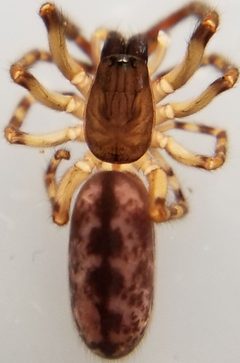
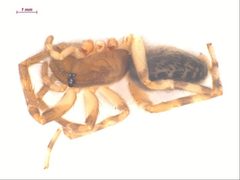
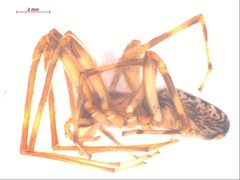
Segestria pacifica is a of tube web spider in the Segestriidae, first described by Nathan Banks in 1891. It is found in the western United States and British Columbia, Canada. The species is characterized by its brown coloration, medium-large body size, and notably large, black, shiny . Like other segestriids, it constructs silken tubes in crevices for shelter and prey capture.
Pronunciation
How to pronounce Segestria pacifica: /sɛˈɡɛstriə pəˈsɪfɪkə/
These audio files are automatically generated. While they are not always 100% accurate, they are a good starting point.
Identification
Distinguished from other Segestria by geographic range (western North America) and potentially by , though species-level identification within the requires detailed examination. The combination of brown coloration with conspicuously large, black, shiny chelicerae is characteristic.
Images
Appearance
Medium-large brown spider with large, black, and shiny (mouthparts).
Habitat
Constructs silken tubes in crevices, cracks, or under rocks and bark. Specific microhabitat preferences are not well documented for this .
Distribution
Western United States and British Columbia, Canada.
Behavior
Constructs silken tubes for shelter and ambush , a trait shared with other members of Segestriidae.
Similar Taxa
- Segestria senoculataEuropean with similar tube-web building ; distinguished by geographic separation (S. senoculata is Palearctic) and subtle morphological differences in arrangement and body proportions.
- Segestria florentinaLarger Mediterranean , sometimes introduced to other regions; S. pacifica is smaller and restricted to western North America.
More Details
Taxonomic history
Described by Nathan Banks in 1891, representing one of the earlier descriptions of North American Segestriidae.
Family characteristics
Segestriidae are distinguished among spiders by having only six (arranged in three pairs) rather than the typical eight, and by their elongated .