
Citharoceps
Chamberlin, 1924
Species Guides
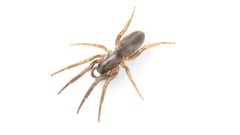
1Citharoceps is a of tube-dwelling spiders in the Segestriidae, established by Chamberlin in 1924. The genus contains two described , both found in North America: C. fidicina (southern United States and Mexico) and C. cruzana (United States). These spiders are characterized by their elongated, cylindrical and six arranged in three pairs, traits typical of their family.
Pronunciation
How to pronounce Citharoceps: //ˌsɪθ.ə.roʊˈsɛps//
These audio files are automatically generated. While they are not always 100% accurate, they are a good starting point.
Identification
Members of Citharoceps can be distinguished from other Segestriidae by a combination of morphological features, though specific diagnostic characters require examination of . The genus shares the 's characteristic six-eyed arrangement (three dyads) and elongated body form. -level identification relies on subtle differences in genitalic and somatic proportions described in Chamberlin's original works.
Images
Distribution
North America: United States (C. fidicina, C. cruzana) and Mexico (C. fidicina only). The has a restricted range compared to other Segestriidae genera.
Similar Taxa
- SegestriaSegestria is the most -rich in Segestriidae and shares the six-eyed arrangement and tubular retreat construction. Citharoceps differs in genitalic and geographic restriction to North America, whereas Segestria has a broader Palearctic and Mediterranean distribution.
- AriadnaAriadna is the other major in Segestriidae, also with a more widespread distribution (Africa, Australia, South America). Citharoceps is distinguished by its Nearctic distribution and specific somatic proportions, though detailed comparative studies are limited.
More Details
Taxonomic history
Chamberlin described Citharoceps in 1924 based on C. fidicina from the southwestern United States. C. cruzana was added in 1935. The has received limited taxonomic attention since its original description, and no phylogenetic studies have explicitly tested its monophyly relative to other Segestriidae genera.
Observation scarcity
As of 2021, iNaturalist records only 6 observations for the entire , indicating either genuine rarity, cryptic habits, or undercollection. Both appear to be infrequently encountered in the field.