
Ariadna
Audouin, 1826
Tube-web Spiders
Species Guides
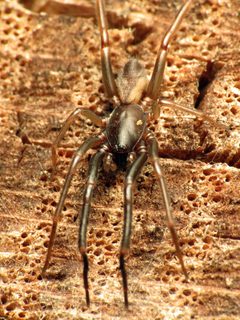
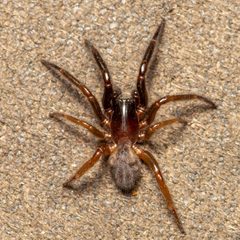
2Ariadna is a of tube-dwelling spiders in the Segestriidae, established by Audouin in 1826 with Ariadna insidiatrix as the type . The genus comprises approximately 147 species found on all continents except Antarctica, with particularly high diversity in Australia and South Africa. These spiders construct silk-lined tubes in which they wait to ambush prey using specialized sensory trip lines. They are characterized by six arranged in two rows, three pairs of legs directed forward, and distinctive spines on the front legs for prey capture.
Pronunciation
How to pronounce Ariadna: /ˈɛə.riːˌæd.nə/
These audio files are automatically generated. While they are not always 100% accurate, they are a good starting point.
Identification
Distinguished from other spider by combination of: six in two rows (vs. eight eyes in most spiders); three pairs of legs directed forward (I, II, and III); cylindrical ; and tube-dwelling . Within Segestriidae, distinguished from Segestria by genitalic and other subtle morphological features. The forward-directed third pair of legs is particularly distinctive and aids in rapid movement within tubes. Eye arrangement and reduced eye number (six vs. eight) separates this from most other spider families.
Images
Habitat
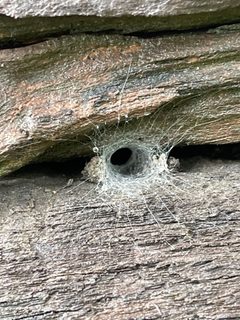
Constructs silk-lined tubes in various substrates; specific microhabitat preferences vary by . Tubes feature entrance collar of regular white silk and radiating non-adhesive trip lines for prey detection.
Distribution
Found on all continents except Antarctica. Approximately one-third of to Australia. Fifteen described species endemic to South Africa. Fewer than ten species in Europe and North America respectively. distribution with centers of diversity in Southern Hemisphere landmasses.
Diet
; preys on insects and other small arthropods that contact trip lines. Prey seized instantly and pulled into tube using spined front legs.
Behavior
Strictly . Occupies silk-lined tube with six legs visible at entrance rim during activity period. Prey detected through vibrations transmitted by radiating trip lines. Strikes with rapid jack-in-the-box-like reaction to seize prey and pull it into tube. Third pair of legs directed forward enables quick forward and backward movement within confined tube space. Double row of spines on front legs assists in grasping and holding prey. Trip lines lack adhesive elements and serve purely sensory function.
Ecological Role
of small arthropods; contributes to soil and litter dynamics through pressure.
Human Relevance
Not medically significant; bites not considered dangerous to humans. Ecological interest due to distinctive tube-dwelling and sensory prey capture system.
Similar Taxa
- SegestriaAlso in Segestriidae and shares tube-dwelling habit, six , and forward-directed legs; distinguished by genitalic and other subtle structural features
- DysderaShares elongated body form and six ; distinguished by different eye arrangement (clustered rather than two rows), different cheliceral structure, and non-tube-dwelling
More Details
Tube structure
Tube entrance bears small collar of very regular white silk; trip lines radiate from entrance without adhesive elements
Taxonomic history
established 1826 by Audouin; type Ariadna insidiatrix; currently 147 described species as of September 2025