
Zygoballus rufipes
G.W. Peckham & E.G. Peckham, 1885
Hammer-jawed Jumping Spider
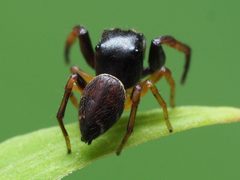
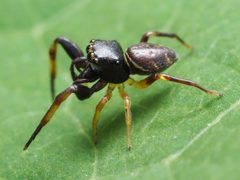
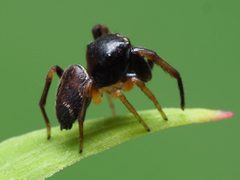
Zygoballus rufipes is a small jumping spider distributed from Canada through the United States to Central America. females measure 4.3–6 mm in body length, while males are smaller at 3–4 mm. Males exhibit body-size dimorphism with two distinct size classes, a trait linked to alternative life-history strategies. The was first described from Guatemala in 1885 and later synonymized with Z. bettini in 1980.
Pronunciation
How to pronounce Zygoballus rufipes: //ˌzaɪɡoʊˈbæləs ˈruːfɪˌpiːz//
These audio files are automatically generated. While they are not always 100% accurate, they are a good starting point.
Identification
Distinguished from by geographic distribution and male dimorphism. The was historically confused with Z. bettini, described as a separate species in 1888, but synonymized in 1980 based on G.B. Edwards' examination showing variable appearance across rather than consistent distinct differences. Specific diagnostic characters for field identification are not documented in available sources.
Images
Distribution
Canada; United States; Mexico; Guatemala; Rica. Reports from Panama remain unconfirmed—specimens reported by Nathan Banks in 1929 were reassigned to Zygoballus optatus by Arthur M. Chickering in 1946, and subsequent surveys by Wolfgang Nentwig failed to locate the there.
Behavior
Males exhibit body-size dimorphism consistent with two size-based alternative life-history strategies, with smaller and larger morphs potentially maturing at different instars. This pattern aligns with Przibram's Rule predictions for hemimetabolous growth.
Similar Taxa
- Zygoballus bettiniFormerly described as a separate in 1888 based on northern , but synonymized with Z. rufipes in 1980 by G.B. Edwards due to insufficiently consistent morphological differences across populations.
- Zygoballus optatusSpecimens from Panama originally identified as Z. rufipes by Banks (1929) were reassigned to this newly described by Chickering (1946).
More Details
Taxonomic history
The Peckhams first described the from Guatemala in 1885, then described Z. bettini as a separate species in 1888. G.B. Edwards examined specimens from various in 1980 and concluded the differences were not consistently distinct, leading to synonymization.
Male dimorphism research
A 1994 study in Journal of Zoology found male body weight distribution was bimodal with two distinct size classes. The observed ratio of mean weights for the two morphs (2.12) was not significantly different from Przibram's Rule value (2.09), suggesting males mature at two different instars.
Sources and further reading
- BugGuide
- Wikipedia
- GBIF taxonomy match
- iNaturalist taxon
- NCBI Taxonomy
- Catalogue of Life
- Vanquished vanishing columbines: Columbine sawfly, Pristiphora rufipes — Bug of the Week
- Cicindelidae | Beetles In The Bush | Page 7
- Fungus Manipulates Ants to Die Near their Nests, Ensuring New Hosts
- Bug Eric: More Beetles from Bones
- Working with Cerceris fumipennis—Part 2 | Beetles In The Bush
- Red-eyed poop! | Beetles In The Bush
- Przibram's Rule and male body‐size dimorphism in Zygoballus rufipes (Araneae: Salticidae)