
Zygoballus nervosus
(G.W. Peckham & E.G. Peckham, 1888)
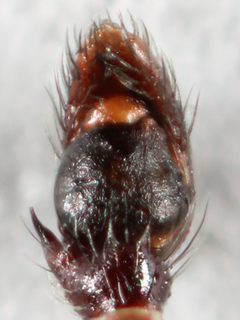
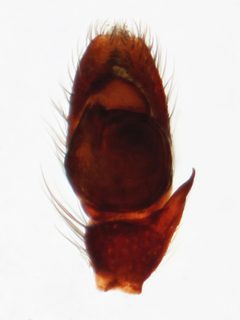
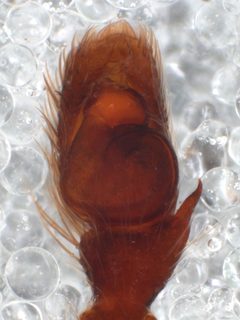
Zygoballus nervosus is a small jumping spider (Salticidae) native to eastern North America. First described by the Peckhams in 1888, it was later synonymized with Z. terrestris. The is distinguished from by specific proportions, leg dimensions, and male cheliceral . body length ranges from 2.5–4.5 mm in males and 3–4 mm in females.
Pronunciation
How to pronounce Zygoballus nervosus: /ˌzaɪɡoʊˈbæləs nərˈvoʊsəs/
These audio files are automatically generated. While they are not always 100% accurate, they are a good starting point.
Identification
Males distinguished from Z. sexpunctatus by absence of a large white spot at the thoracic slope and lack of thick white lateral scale coverage from to beyond . Distinguished from Z. rufipes by wider, heavier ; shorter ; longer, narrower hammer-like cheliceral process; and less steep thoracic slope. Leg and proportions differ: Z. nervosus has shorter, thicker appendages with tibiae 2.5× long/wide versus 4× in Z. sexpunctatus or 4–6× in Z. rufipes. Females identified by epigyne with anteriorly positioned, closely spaced openings.
Images
Appearance
Small jumping spider with females 3–4 mm and males 2.5–4.5 mm in body length. The sides of the are nearly vertical anteriorly and more rounded posteriorly. The ocular area occupies nearly three-fifths of the cephalothorax length and is widest at the lateral . eyes are twice the size of anterior lateral eyes; posterior lateral eyes approximately equal anterior lateral eyes in size. Male legs and are shorter and thicker than those of related ; anterior leg tibiae typically 2.5× as long as wide.
Distribution
Eastern United States and southeastern Canada. Documented from Maine, Massachusetts, Connecticut, New York, Virginia, Illinois, Georgia, Florida, Minnesota, Ohio, Kansas, Louisiana, eastern and central Texas, and Quebec. Range overlaps with Z. sexpunctatus and Z. rufipes.
Similar Taxa
- Zygoballus sexpunctatusOverlapping range; distinguished by male's white thoracic spot and extensive lateral scale coverage, plus longer, more slender leg proportions
- Zygoballus rufipesOverlapping range; distinguished by male's narrower , longer , shorter hammer-like process, steeper thoracic slope, and more elongate legs
More Details
Taxonomic history
Originally described as Eris nervosus (1888), later as Zygoballus terrestris (1891). Emerton recognized their conspecificity; Peckhams formally transferred to Zygoballus nervosus in 1909, establishing current .