
Talavera
G. W. Peckham & E. G. Peckham, 1909
Species Guides
1- Talavera minuta(Minute Jumping Spider)
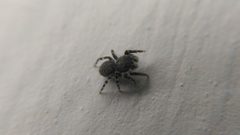
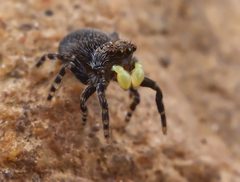
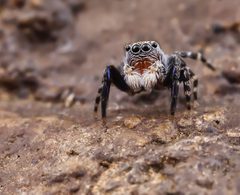
Talavera is a of minute jumping spiders (Salticidae) established by George and Elizabeth Peckham in 1909. These spiders are exceptionally small, averaging approximately 2 mm in body length, and exhibit remarkable morphological similarity among —particularly within Central European , where identification often requires microscopic examination of genital structures. The genus name commemorates Talavera, Spain, a region where numerous specimens have been collected. The group represents one of several genera of diminutive salticids that challenge taxonomic distinction due to conserved external .
Pronunciation
How to pronounce Talavera: //tɑˈlɑvɛrə//
These audio files are automatically generated. While they are not always 100% accurate, they are a good starting point.
Identification
Identification to possible by minute size combined with salticid arrangement and jumping spider . -level identification within Talavera is notoriously difficult, especially for Central European , and typically requires microscopic analysis of male palpal bulbs and female epigynal structures. External characters alone are unreliable for distinguishing species. Similar minute salticid genera (e.g., some Neon, Euophrys) may overlap in size; Talavera is distinguished by specific genital and geographic association with the type region.
Images
Appearance
Extremely small spiders averaging ~2 mm in total body length. External is highly conserved across , with limited visible differentiation in coloration, pattern, or body proportions. Genital structures (particularly male palps and female epigynes) provide the primary diagnostic features for species-level identification.
Distribution
Documented from Denmark (DK), Norway (NO), and Sweden (SE) based on GBIF distribution records. The type region is Talavera, Spain, where the was first discovered and named. Additional unverified observations suggest broader Palearctic distribution, but confirmed records are sparse.
Behavior
Jumping spiders (Salticidae) are active visual that stalk and pounce on prey; this is presumed for Talavera given membership, though specific behavioral observations for this are undocumented.
Similar Taxa
More Details
Taxonomic Challenge
The exemplifies a common problem in salticid : cryptic masked by conserved external . The Peckhams' original 1909 description noted this uniformity, and modern identification still relies heavily on genital dissection and microscopy.
Etymology
The name directly references Talavera, Spain (specifically Talavera de la Reina or surrounding region), the locality where were collected. This follows a common practice among early arachnologists of using place names for newly described genera.