
Habronattus oregonensis
(G.W. Peckham & E.G. Peckham, 1888)
Oregon Paradise Spider
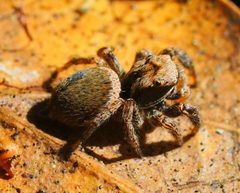
Habronattus oregonensis is a of jumping spider in the Salticidae, first described in 1888 by the Peckhams. As a member of the large Habronattus, it shares the group's characteristic elaborate courtship involving multimodal communication. The species occurs across western North America from Canada through the United States to Mexico. Like other Habronattus species, males likely possess modified third legs used in visual displays during courtship, though species-specific details for H. oregonensis require further documentation.
Pronunciation
How to pronounce Habronattus oregonensis: /ˌhæbroʊˈnætəs ˌɔːrɪgoʊˈnɛnsɪs/
These audio files are automatically generated. While they are not always 100% accurate, they are a good starting point.
Identification
Habronattus oregonensis can be distinguished from other Habronattus through examination of genitalia, particularly the male and female . Within the , males typically show species-specific color patterns and leg modifications. H. oregonensis may be confused with other western Habronattus species; precise identification requires microscopic examination of reproductive structures. The genus itself is recognizable by the relatively small body size and, in males, modified third legs with spurs or brushes used in .
Images
Habitat
Ground-dwelling in areas of scattered vegetation, including prairies, grasslands, and open woodland edges. Found on stones, leaf litter, and low vegetation.
Distribution
Western North America: Canada (Alberta, British Columbia), United States, and Mexico. Records indicate presence across the western continental region.
Ecological Role
As a small predatory spider, likely contributes to control of small insect in ground-level .
Similar Taxa
- Habronattus cuspidatusOverlaps in range and ; males also possess modified third legs with prominent spurs, requiring genital examination for separation.
- Habronattus calcaratusRelated with similar male leg modifications and courtship ; distinguished by specific genitalic structures and coloration details.
- Other Habronattus speciesThe contains approximately 100 with many western representatives; most require microscopic examination of genitalia for definitive identification.