
Chinattus
Logunov, 1999
Species Guides
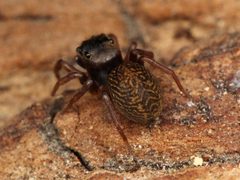
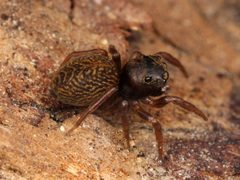
1- Chinattus parvulus(Little Mountain Jumping Spider)
Chinattus is a of jumping spiders (Salticidae) established by Logunov in 1999, with Heliophanus undulatus as the type . The genus name combines 'China' with the common salticid suffix '-attus'. It comprises approximately 20 recognized species distributed across the south-eastern Palaearctic and adjacent Oriental Regions, with a strong concentration in China and nearby countries. One species, C. parvulus, represents a notable disjunct occurrence in North America.
Pronunciation
How to pronounce Chinattus: //tʃɪˈnætəs//
These audio files are automatically generated. While they are not always 100% accurate, they are a good starting point.
Identification
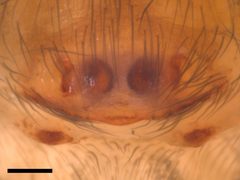
Members of Chinattus can be distinguished from related salticid by specific morphological characters established in the original genus description, though detailed diagnostic features require examination of and original taxonomic literature. The genus is placed in the tribe Hasariini.
Images
Habitat
Broad-leaved forests in montane ; mountainous and subtropical . The type locality of C. huanggangshan was recorded at 1153 m elevation in hilly terrain. have been documented across diverse elevations in southern and central Chinese provinces.
Distribution
Core distribution in China, with records from Anhui, Hunan, Yunnan, Hubei, Taiwan, Guangdong, Hong Kong, Guizhou, Fujian, Chongqing, Sichuan, and Jiangxi Provinces. Broader range extends to Nepal, Bhutan, Japan, Vietnam, the Caucasus, and Iran. One disjunct , C. parvulus, occurs in the eastern United States and south-eastern Canada.
Behavior
Collected by beating vegetation, indicating arboreal or shrub-dwelling habits in forest vegetation layers.
Similar Taxa
- HasariusBoth belong to tribe Hasariini; Chinattus was separated from related based on distinct morphological characters in 1999.
- HeliophanusThe type of Chinattus was originally described as Heliophanus undulatus, indicating historical taxonomic proximity and potential similarity in general body plan.
More Details
Taxonomic history
The was erected by D.V. Logunov in 1999 to accommodate previously placed in other genera, with Heliophanus undulatus (Song & Chai, 1992) designated as type species. Approximately 68% of species are documented solely from their type localities, indicating substantial gaps in distributional knowledge.
Biogeographic pattern
The exhibits a Himalayan-Chinese distributional core with a notable disjunct in North America (C. parvulus), suggesting complex historical . The 2024 description of C. huanggangshan from Jiangxi Province filled a perceived geographical gap between known records in adjacent provinces.