
Pimoidae
Wunderlich, 1986
Large Hammock-web Spiders
Genus Guides
1- Pimoa(large hammockweb spiders)
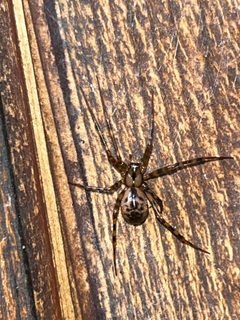
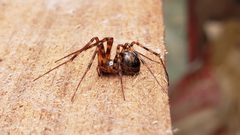
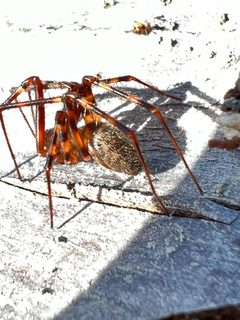
Pimoidae is a small of araneomorph spiders established by Wunderlich in 1986, closely related to Linyphiidae and sometimes treated as synonymous with that family. As re-circumscribed in 2021, it is monophyletic and contains approximately 90 in two , primarily Pimoa and Weintrauboa. Members are commonly known as large hammock-web spiders due to their substantial size relative to linyphiids and their horizontal, net-like webs. The family has a fragmented relictual distribution across the Pacific coast of North America, the Cantabrian Mountains of Spain, the European Alps, and the Himalayas and adjacent regions of Asia.
Pronunciation
How to pronounce Pimoidae: //pɪˈmɔɪd.i.aɪ//
These audio files are automatically generated. While they are not always 100% accurate, they are a good starting point.
Identification
Distinguished from the closely related Linyphiidae by larger body size (5-12 mm versus typically smaller linyphiids) and proportionally longer legs. Webs are fine, net-like, and horizontal, often issuing from crevices in logs, fences, or retaining walls. The family can be difficult to identify without examination of genitalic characters; molecular data and detailed morphological analysis are often required for -level identification within the Pimoa.
Images
Habitat
Terrestrial; primarily associated with coniferous forests in rain shadow regions, particularly along the Pacific coast of North America. European occupy caves and subterranean including mineshafts and military bunkers in alpine environments, as well as occasional epigean occurrences in larch woods and rocky debris. Asian species occur in high-elevation regions of the Himalayas and Qinghai-Tibet Plateau. Webs are constructed in crevices of logs, fences, and retaining walls.
Distribution
Fragmented relictual distribution: Pacific coast of North America from approximately California to Alaska; Cantabrian Mountains of northern Spain; European Alps (primarily Italy, France, Switzerland); Himalayas and adjacent mountain ranges of Southwest China, Sichuan, Qinghai, and Tibet. Ancestral distribution thought to have been more continuous across Palearctic, Nearctic, and Sino-Japanese regions.
Seasonality
observed primarily during summertime; has been observed in summer months in some . Specific seasonal patterns vary by geographic region and species.
Life Cycle
length approximately one year in studied . Females deposit nearly spherical sacs in July, guarding them and affixing substrate particles for camouflage. Egg counts range from approximately 80 to 100 eggs per sac. Juveniles observed in epigean environments during summer, suggesting potential through surface under suitable conditions.
Behavior
Constructs fine, net-like, horizontal webs that can span up to one yard (three feet) though typically smaller (around six inches). Spiders hide in crevices or retreats during daylight hours, hanging from the underside of the web at night or during overcast conditions. Exhibits thanatotic (death feigning) when disturbed, possibly as antipredator defense. of legs below the patellar segment has been observed as an escape mechanism from , with retained agility despite leg loss.
Ecological Role
Web-building ; specific prey interactions and trophic position not documented in available sources.
Human Relevance
Minimal direct interaction with humans. Some of conservation concern due to extremely narrow geographic ranges and specialization; Pimoa delphinica has been assessed for conservation status due to its stenoendemic distribution in the Western Alps. Named species Pimoa cthulhu references H.P. Lovecraft's mythological deity.
Similar Taxa
- LinyphiidaeClosely related with which Pimoidae shares web-building and general ; distinguished by substantially smaller body size and shorter legs in most linyphiids, though some sources treat Pimoidae as synonymous with Linyphiidae
More Details
Taxonomic History
established by Wunderlich in 1986; re-circumscribed in 2021 as monophyletic. Contains two as of 2026: Pimoa (approximately 85 , highly diverse in Asia with 67 species) and Weintrauboa. Previously included Putaoa, now placed elsewhere. Family 'Sinopimoidae' has been proposed but its phylogenetic placement remains under discussion.
Phylogeography
Molecular and morphological evidence suggests European alpine originated from range contractions following dramatic climatic changes in the Alps since the mid-Miocene, with present-day overlapping distributions possibly resulting from postglacial expansion. between sympatric of different species has been documented.
Sources and further reading
- BugGuide
- Wikipedia
- GBIF taxonomy match
- iNaturalist taxon
- NCBI Taxonomy
- Catalogue of Life
- Bug Eric: Large Hammockweb Spiders: Pimoa
- Unexpected diversity in the relictual European spiders of the genus Pimoa (Araneae : Pimoidae)
- Notes on three closely related species of the genus Pimoa (Araneae, Pimoidae) from Southwest China
- Species conservation profile of the stenoendemic cave spider Pimoa delphinica (Araneae, Pimoidae) from the Varaita valley (NW-Italy)
- On the spider genus Weintrauboa (Araneae, Pimoidae), with a description of a new species from China and comments on its phylogenetic relationships
- Three new species of the spider genus Pimoa Chamberlin & Ivie, 1943 (Araneae, Pimoidae) from Qinghai-Tibet Plateau of China