
Oxyopes tridens
Brady, 1964
Oxyopes tridens is a of lynx spider in the Oxyopidae. It was described by Brady in 1964. The species is found in the United States and Mexico. As a member of the Oxyopes, it shares the characteristic hunting of lynx spiders, which are active that stalk and pounce on prey.
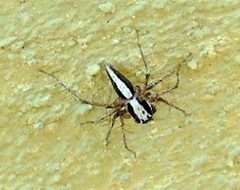
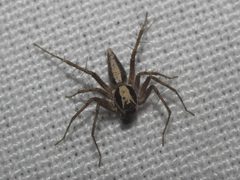
Pronunciation
How to pronounce Oxyopes tridens: /ˈɒksiˌoʊpiːz ˈtraɪdɛnz/
These audio files are automatically generated. While they are not always 100% accurate, they are a good starting point.
Identification
Oxyopes tridens belongs to the lynx spider Oxyopes, which is characterized by long, spiny legs and a distinctive arrangement with eight eyes in four rows forming a hexagonal pattern. The specific epithet 'tridens' suggests a three-toothed or three-pronged feature, though the exact diagnostic characters separating this from require examination of genitalia. Identification to species level in Oxyopes typically relies on detailed examination of male and female under microscopy.
Images
Distribution
United States and Mexico
Similar Taxa
- Oxyopes salticusBoth are North American Oxyopes with similar body plans and hunting , though O. salticus is more widely distributed and better studied in agricultural contexts.
- Oxyopes scalarisAnother North American lynx spider found in similar ; the Western Lynx Spider overlaps in range with O. tridens in parts of the western United States.
More Details
Taxonomic Note
The was described by Alan R. Brady in 1964 as part of his revision of the Oxyopes in Mexico and Central America.
Sources and further reading
- BugGuide
- Wikipedia
- GBIF taxonomy match
- iNaturalist taxon
- Catalogue of Life
- International Exposure for Three UC Davis-Affiliated Photographers | Bug Squad
- Bembicid Holdings | Entomology Research Museum
- Bug Eric: Spider Sunday: Striped Lynx Spider
- Bug Eric: Spider Sunday: Slender Crab Spiders (and their look-a-likes)
- Bug Eric: September 2012
- Cup plant feeds brown ambrosia aphid, Uroleucon ambrosiae, which in turn provides dinner for lynx spiders, lady beetles, long-legged flies, flower flies, and green lacewings — Bug of the Week