
Hamataliwa
Keyserling, 1887
Crowned Lynx Spiders
Species Guides
3- Hamataliwa grisea(Lynx spider)
- Hamataliwa helia
- Hamataliwa unca
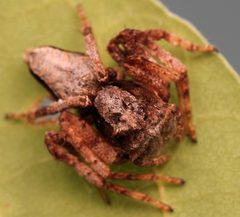
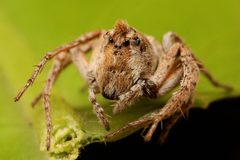
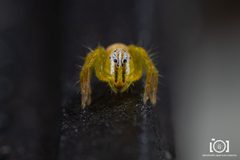
Hamataliwa is a of lynx spiders in the Oxyopidae, first described by Eugen von Keyserling in 1887. The genus contains approximately 90 as of 2025, making it one of the larger genera within its family. Species are distributed across tropical and subtropical regions of Central and South America, Asia, Africa, and Australia, with only three species extending into North America.
Pronunciation
How to pronounce Hamataliwa: /ˌhæmətəˈliːwə/
These audio files are automatically generated. While they are not always 100% accurate, they are a good starting point.
Identification
Members of Hamataliwa can be distinguished from other lynx spider by a combination of cephalothoracic and abdominal features, including the characteristic crown-like arrangement of and spination patterns on the legs. The genus is distinguished from the closely related Oxyopes by differences in eye arrangement and genital . Specific identification to level requires examination of genitalia, particularly the epigyne in females and the palpal bulb in males.
Images
Distribution
Behavior
As with other lynx spiders (Oxyopidae), members of this are active hunters that do not construct webs for prey capture. They have been observed to possess good vision and rapid movement capabilities associated with their hunting strategy.
Similar Taxa
- OxyopesAnother large of lynx spiders; distinguished from Hamataliwa by differences in arrangement and genital
- PeucetiaLynx spider with green coloration in many ; Hamataliwa species typically lack the bright green coloration characteristic of Peucetia
More Details
Taxonomic history
The was established by German arachnologist Eugen von Keyserling in 1887. The number of described has grown substantially, from 83 species in 2017 to approximately 90 species as of September 2025.