
Nesticus furtivus
Gertsch, 1984
Crystal Caverns Cave Spider
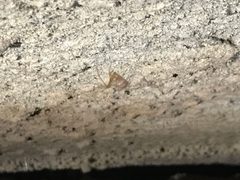
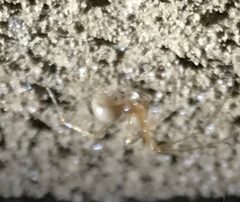
Nesticus furtivus is a small cave-dwelling spider to a single cave system in Tennessee. It belongs to the Nesticidae, a group commonly known as cave spiders or scaffold web spiders. The has been documented only from Raccoon Mountain Caverns (formerly Crystal Caverns) near Chattanooga, making it one of the most geographically restricted spider species in North America. Its specific epithet 'furtivus' refers to its secretive, hidden lifestyle in subterranean .
Pronunciation
How to pronounce Nesticus furtivus: //ˈnɛstɪkəs ˈfɜrtɪvəs//
These audio files are automatically generated. While they are not always 100% accurate, they are a good starting point.
Identification
As a Nesticidae , Nesticus furtivus likely possesses the characteristics of long, thin legs relative to body size and six arranged in a compact group. Definitive identification requires examination of genitalia structures, particularly the male and female , which are species-specific. Distinguishing N. furtivus from other Nesticus species requires comparison with described ; it is separated from primarily by subtle differences in sclerotized reproductive structures.
Images
Habitat
Restricted to the subterranean environment of Raccoon Mountain Caverns, a limestone cave system in eastern Tennessee. The inhabits the dark zone of the cave, beyond the reach of daylight. Specific microhabitat preferences within the cave system have not been documented.
Distribution
to Raccoon Mountain Caverns (formerly Crystal Caverns), Hamilton County, Tennessee, United States. No other are known.
Human Relevance
The ' extremely restricted range makes it vulnerable to disturbance from the commercial cave operation at Raccoon Mountain Caverns. It has been cited in discussions of cave biodiversity conservation and the unique fauna of Tennessee cave systems. No direct economic or medical importance has been documented.
Similar Taxa
- Nesticus tennesseensisAnother Nesticus found in Tennessee caves; distinguished by male and female
- Nesticus barriSoutheastern US cave-dwelling ; geographic separation and subtle structural differences in reproductive anatomy
More Details
Conservation status
Nesticus furtivus has an extremely small range (single cave system) and is potentially vulnerable to modification, though no formal conservation assessment has been published.
Taxonomic history
Described by Willis J. Gertsch in 1984 based on specimens collected from Crystal Caverns. The cave was subsequently renamed Raccoon Mountain Caverns following changes in commercial ownership.