
Pardosa uintana
Gertsch, 1933
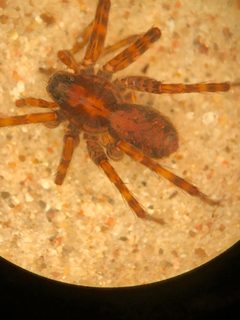
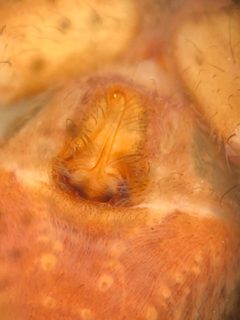
Pardosa uintana is a of thin-legged wolf spider in the Lycosidae, described by Gertsch in 1933. Like other members of the Pardosa, it is characterized by long spines on the legs that are nearly perpendicular to the leg axis. The species occurs in western North America, with records from Alberta and British Columbia in Canada. As with most Pardosa species, identification to species level requires microscopic examination of genitalia.
Pronunciation
How to pronounce Pardosa uintana: //pɑrˈdoʊsə waɪˈntænə//
These audio files are automatically generated. While they are not always 100% accurate, they are a good starting point.
Identification
Identifiable as Pardosa by the perpendicular long spines on the legs, particularly visible on the hind pair. Distinguished from other wolf spider (Lycosa, Hogna, etc.) by this spine orientation. -level identification requires microscopic examination of the in females or the in males. The specific epithet 'uintana' suggests a possible association with the Uinta Mountains or region, though this has not been verified in available literature.
Images
Appearance
Small to medium-sized wolf spider. Body length likely falls within the 3-12 mm range typical for the Pardosa. Long spines on legs are nearly perpendicular to the leg axis, distinguishing it from other wolf spider genera where spines are shorter and more parallel to the leg surface. Hind legs are relatively long, making the perpendicular spines especially visible on this pair. is higher than in most other wolf spiders, with nearly vertical sides of the . arrangement follows the lycosid pattern: four small eyes in the row, two large eyes, and a pair of posterior laterals set well back on the . Coloration and pattern details specific to this are not documented in available sources.
Habitat
Specific preferences for Pardosa uintana are not documented. Based on -level patterns, Pardosa occupy diverse habitats including rocky streambeds, marshy wetlands, lake beaches, forest floors, fields, and agricultural edges. Some Pardosa species occur at high elevations in mountainous regions. The species has been recorded in Alberta and British Columbia, suggesting to northern and potentially montane environments.
Distribution
Recorded from western North America. Confirmed occurrences in Alberta and British Columbia, Canada. The full extent of its range within the United States is not clearly documented in available sources, though the specific epithet suggests possible association with the Uinta region.
Seasonality
Activity patterns specific to Pardosa uintana are not documented. Some Pardosa are winter-active, while others overwinter as or immatures.
Life Cycle
Specific details are not documented for this . As a lycosid spider, females likely carry sacs attached to their , and spiderlings likely ride on the mother's back after hatching. Development probably includes egg, spiderling, and stages without a pupal phase.
Behavior
Specific are not documented for this . As a member of the Pardosa, it is likely an active ground-dwelling hunter that does not build webs to capture prey.
Ecological Role
Functions as a in its , controlling of small . Serves as prey for larger invertebrates and vertebrates. Specific ecological interactions are not documented.
Human Relevance
No specific human relevance documented. As a small wolf spider, it poses no threat to humans and may contribute to pest control in natural and agricultural settings.
Similar Taxa
- Other Pardosa speciesShare the characteristic perpendicular leg spines and general body form. Distinguished only by genitalia and subtle color/pattern differences.
- Lycosa speciesSimilar arrangement and general wolf spider appearance, but have shorter spines more parallel to leg surface.
- Hogna speciesLarger wolf spiders with different spine orientation and generally more robust build.
More Details
Taxonomic Note
The specific epithet 'uintana' may refer to the Uinta Mountains or Uinta region, though this etymology has not been confirmed in available sources. The was described by Willis J. Gertsch in 1933.
Data Limitations
This is poorly represented in public biological databases, with only 6 observations recorded in iNaturalist as of the knowledge cutoff. Most biological details must be inferred from -level patterns, which may not accurately reflect this species' .