
Pardosa californica
Keyserling, 1887
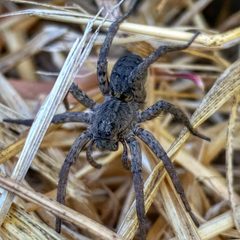
Pardosa californica is a of thin-legged wolf spider in the Lycosidae, first described by Keyserling in 1887. It belongs to the Pardosa, which comprises small to medium-sized wolf spiders characterized by long spines on their legs that are nearly perpendicular to the leg axis. The species is found in the United States and Mexico. Like other members of its genus, it is likely associated with moist near water sources, though specific ecological details for this species remain limited.
Pronunciation
How to pronounce Pardosa californica: //pɑːrˈdoʊsə ˌkælɪˈfɔːrnɪkə//
These audio files are automatically generated. While they are not always 100% accurate, they are a good starting point.
Identification
Members of the Pardosa can be distinguished from other wolf spiders by examining the legs: Pardosa possess long spines that extend almost perpendicular to the leg axis, whereas most other wolf spiders have shorter spines oriented more parallel to the leg surface. The hind pair of legs is particularly long, making the spines on this pair easier to observe. Pardosa californica is a small to medium-sized spider with a that is higher than in most other wolf spiders and sides of the that are nearly vertical. Definitive species identification requires microscopic examination of genitalia: females possess a paired , while males have highly modified resembling small boxing gloves.
Images
Habitat
Based on -level characteristics, Pardosa are most abundant around water sources including rocky streambeds, marshy wetlands, and lake beaches. They also occur in wooded areas where they prowl forest floors, scramble over logs, and move through leaf litter, as well as in fields and agricultural edges. Some Pardosa species occupy high elevations in mountainous regions.
Distribution
United States and Mexico. Records indicate presence in North America and Middle America.
Similar Taxa
- Other Pardosa speciesSixty-five of Pardosa are recognized in the U.S. alone, all sharing the characteristic perpendicular leg spines and similar body plans. Microscopic examination of genitalia is required to distinguish P. californica from .
- Other Lycosidae generaWolf spiders outside Pardosa lack the distinctive long, perpendicular leg spines; their spines are shorter and more parallel to the leg surface. The higher and nearly vertical sides of Pardosa also help separate it from other wolf spider .
Sources and further reading
- BugGuide
- Wikipedia
- GBIF taxonomy match
- NCBI Taxonomy
- Catalogue of Life
- The Big 43: The California Native Plants, Plus One, Studied in UC Davis Research | Bug Squad
- Bohart Museum: Learn about California's State Insect on UC Davis Picnic Day | Bug Squad
- A Mural Like No Other | Bug Squad
- A Flash of Orange: Welcome, California Tortoiseshell! | Bug Squad
- California Dogface Butterfly: What the Fire Did | Bug Squad
- Bug Eric: July 2015