
Alopecosa kochi
(Keyserling, 1877)
Koch's Wolf Spider
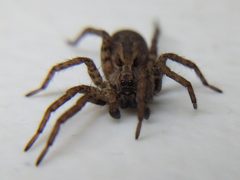
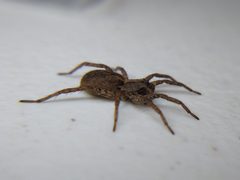
Alopecosa kochi is a medium-sized wolf spider (Lycosidae) distributed across North America from southern Canada to northern Mexico. It is an active hunter that does not build capture webs, instead pursuing small on open ground. The exhibits clear , with males typically smaller, darker, and possessing more defined leg banding. Females carry sacs attached to their and transport spiderlings on their backs after hatching.
Pronunciation
How to pronounce Alopecosa kochi: //ˌæloʊpɛˈkoʊsə ˈkoʊki//
These audio files are automatically generated. While they are not always 100% accurate, they are a good starting point.
Identification
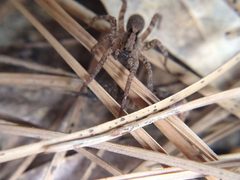
Distinguished from other wolf spiders by the combination of: medium size (8–13 mm), dark brown to grayish coloration with pale stripe on , and pale abdominal pattern with dark marginal bands. Males identifiable by distinctive palpal organs and darker, more banded appearance. The elevated and compact body shape aid in rapid ground movement. Alopecosa generally lack the prominent shine of some other Lycosidae . Separation from other Alopecosa species requires examination of genitalia and detailed pattern analysis.
Images
Habitat
Open and dry including grasslands, forest edges, and sandy soils. Tolerates both arid and temperate conditions. Occasionally found indoors, likely seeking shelter during colder months.
Distribution
North America: southern Canada through the United States to northern Mexico. Documented in Alberta (Canada), and widely across the continental United States.
Seasonality
Most frequently observed in March, with additional records from January, February, April, June, August, and December. Activity appears to extend across much of the year with peak in early spring.
Diet
Life Cycle
Females carry sacs attached to . After hatching, spiderlings ride on the female's back for several days. Males travel widely to find mates during warmer months and often die shortly after mating. Reproductive timing varies seasonally, with longer breeding periods in warmer regions.
Behavior
Active hunter that does not spin capture webs; uses silk primarily for sacs and retreats. activity pattern. Generally calm and solitary but capable of defensive when threatened. In a study of 17 documented sightings, approximately 6% involved web use, confirming predominantly ground-hunting strategy.
Ecological Role
of small . Prey for birds, lizards, and larger spiders.
Human Relevance
Occasional indoor occurrence, likely incidental during cold weather. No significant economic or medical importance documented.
Similar Taxa
- Other Alopecosa speciesSimilar size, coloration, and preferences; require genital examination for definitive separation
- Hogna and Tigrosa wolf spidersLarger size, different arrangement prominence, and often more robust build distinguish these
- Pardosa speciesGenerally smaller with different abdominal pattern and preferences; often found in moister habitats
More Details
Taxonomic history
Originally described as Tarentula kochii by Eugen von Keyserling in 1877, later placed in Lycosa, and finally transferred to Alopecosa by Petrunkevitch in 1911. Current classification follows World Spider Catalog (2025).
Visual capabilities
The eight provide acute vision essential for hunting and navigation, with the eyes being largest and providing primary forward vision.