
Dismodicus
Simon, 1884
dwarf spiders
Species Guides
1Dismodicus is a of dwarf spiders in the Linyphiidae, first described by Eugène Louis Simon in 1884. The genus contains six distributed across the Northern Hemisphere, with centers of diversity in Europe and North America. These spiders are part of the sheet-web weaving guild, constructing horizontal webs close to the ground.
Pronunciation
How to pronounce Dismodicus: //dɪzˈmɒdɪkəs//
These audio files are automatically generated. While they are not always 100% accurate, they are a good starting point.
Identification
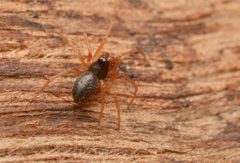
Distinguished from other Linyphiidae by male genitalic , particularly the structure of the embolus and conductor. D. bifrons, the type , has a characteristic dark pattern on the . Microscopic examination of is required for definitive identification to species.
Images
Habitat
Ground-dwelling spiders found in moist microhabitats including leaf litter, moss, and low vegetation. Some occur in tundra and forest environments.
Distribution
Holarctic distribution: Europe (including France, Scandinavia), Russia (European Russia to Far East and West Siberia), North America (USA, Canada, Alaska), and Greenland.
Behavior
Construct horizontal sheet webs close to the ground surface, often with a retreat at the margin. Webs are used for prey capture and shelter.
Ecological Role
Small in ground-layer and litter ; contributes to regulation of microarthropod in forest and tundra .
Human Relevance
No direct economic or medical significance. Occasionally encountered in ecological surveys and biodiversity assessments of ground-dwelling arthropods.
Similar Taxa
- LinyphiaAlso Linyphiidae with sheet webs, but Dismodicus is smaller with different structure and typically ground-dwelling rather than vegetation-dwelling.
- BathyphantesSimilar preferences and body form, but differs in male genitalic and pattern details.
More Details
Type species
Dismodicus bifrons (Blackwall, 1841) was originally described as Linyphia bifrons and later transferred to Dismodicus.
Taxonomic history
The has remained stable since Simon's 1884 description, with six currently recognized . Two species (D. alticeps and D. modicus) were described by Chamberlin & Ivie in 1947 from North American material.