
Neoantistea agilis
(Keyserling, 1887)
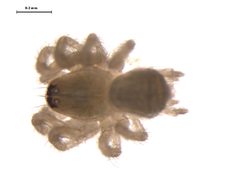
Neoantistea agilis is a of true spider in the Hahniidae, first described by Keyserling in 1887. It is a small spider with a documented distribution across the United States and Canada. The species was originally placed in the Hahnia before being transferred to Neoantistea. Records indicate presence in multiple Canadian provinces including Alberta, British Columbia, and Manitoba.

Pronunciation
How to pronounce Neoantistea agilis: /ˌniː.oʊ.ænˈtɪstiə əˈdʒɪlɪs/
These audio files are automatically generated. While they are not always 100% accurate, they are a good starting point.
Images
Distribution
United States and Canada. Documented Canadian provincial records: Alberta, British Columbia, Manitoba.
More Details
Nomenclature history
Originally described as Hahnia agilis by Keyserling in 1887, later transferred to the Neoantistea.
Sources and further reading
- BugGuide
- Wikipedia
- GBIF taxonomy match
- iNaturalist taxon
- NCBI Taxonomy
- Catalogue of Life
- About Those Sleepovers... | Bug Squad
- The Year 2017: 'Survival of the Flittest' | Bug Squad
- 2023: These Are a Few of My Favorite Things | Bug Squad
- Seen Any Monarchs Lately? | Bug Squad
- Going Native: Do You Know the Native Bees of California? | Bug Squad
- Those Pollinator-Plant Interactions | Bug Squad