
Castianeira longipalpa
(Hentz, 1847)
Long-palped Ant-mimic Spider
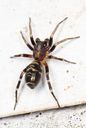
Castianeira longipalpa is an -mimic spider in the Corinnidae, recognized as the most widespread member of its in the United States and Canada. This exhibits of ants, gaining protection from that avoid aggressive ant species. It is a fast, ground-dwelling hunter active during daylight hours.
Pronunciation
How to pronounce Castianeira longipalpa: /kæstiˈænɪərə ˌlɒŋɡɪˈpælpə/
These audio files are automatically generated. While they are not always 100% accurate, they are a good starting point.
Identification
Distinguished from other Castianeira by the combination of multiple transverse abdominal bands and its widespread North American distribution. The specific epithet 'longipalpa' refers to elongated palps, though this trait requires close examination to observe. Separation from C. cingulata (Twobanded Antmimic), which has two prominent pale bands, may require careful band count and geographic context.
Images
Appearance
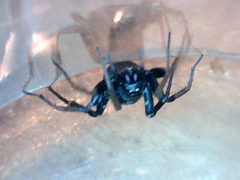
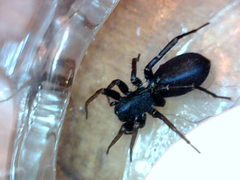
Body coloration ranges from dark grey to brown or black. The displays numerous transverse bands. Females measure 7–9 mm in body length; males are smaller at 5.5–6 mm. The ' -like appearance includes a slender body form and leg positioning that resembles the segmented profile of ants.
Habitat
Occupies ground-level microhabitats including leaf litter, rock crevices, and debris. Found in prairies, deciduous forests, shrubby areas, and wooded sand dunes. Shelters under rocks and accumulated organic matter.
Distribution
Widely distributed across the United States and Canada. Documented from Alberta, British Columbia, and Manitoba in Canada, with extensive records throughout the contiguous United States. The most broadly distributed in the Castianeira across North America.
Seasonality
Active year-round; capable of in dense silken retreats. Peak activity during warmer months.
Behavior
hunter with rapid running capability. Exhibits -mimicry including abdominal bobbing and foreleg waving to simulate ant . Frequently observed in proximity to actual ant colonies to reinforce the deceptive appearance.
Ecological Role
in ground-dwelling . -mimicry provides protection from visually oriented predators that avoid aggressive ant .
Human Relevance
Occasionally encountered in human environments due to ground-dwelling habits. Not considered a pest . Harmless to humans; not dangerously venomous.
Similar Taxa
- Castianeira cingulataAlso an -mimic with banded , but typically has two prominent pale bands rather than numerous transverse bands; ranges from northeastern U.S. to South Dakota and south to Arkansas and Florida
More Details
Family Classification Note
NCBI lists this under Clubionidae, but GBIF and contemporary arachnological sources place it in Corinnidae. Corinnidae is the accepted placement in modern classifications.